

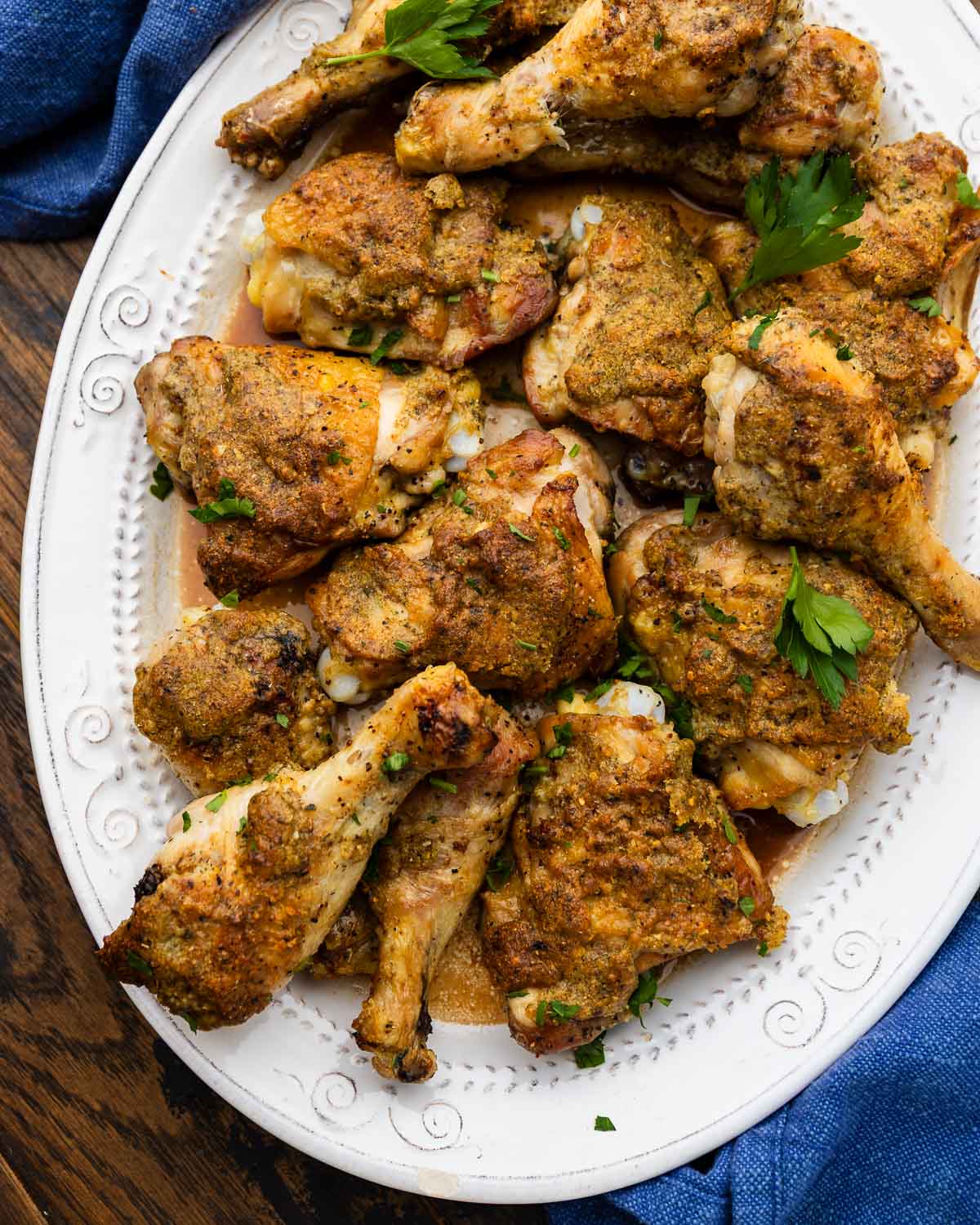
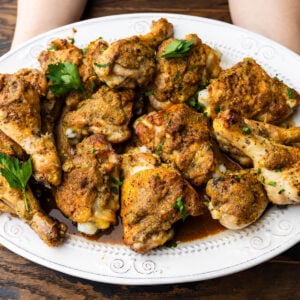
If juicy chicken slathered with herbs, cheese, and garlic, and finished with tangy vinegar sounds like heaven, you need to try Chicken Savoy. This simple dish hails from The Belmont Tavern in northern New Jersey, and while their recipe is a secret, my attempt to duplicate it is pretty darn close!
This post may contain affiliate links. Our disclosure policy.

Readers’ request….
Over the years, I’ve had readers ask me to make several different dishes, such as Utica’s chicken riggies, and The Belmont Tavern’s Chicken Savoy.
Chef “Stretch” Verdicchio’s Chicken is a secret, so I had to do my best to make some educated guesses on what goes into the garlic and herb paste that’s slathered on the chicken. I happen to think my version is delicious, but for those of you who have been to the Belmot Tavern and have tried their Chicken Savoy, leave a comment below to let me know your thoughts!
This chicken dish is great with crusty bread or a side of rice pilaf or creamy polenta, and garlic sauteed spinach.
Recipe Ingredients
All ingredients for this recipe are shown in the pic below and special notes are made in this bulleted list to assist you.
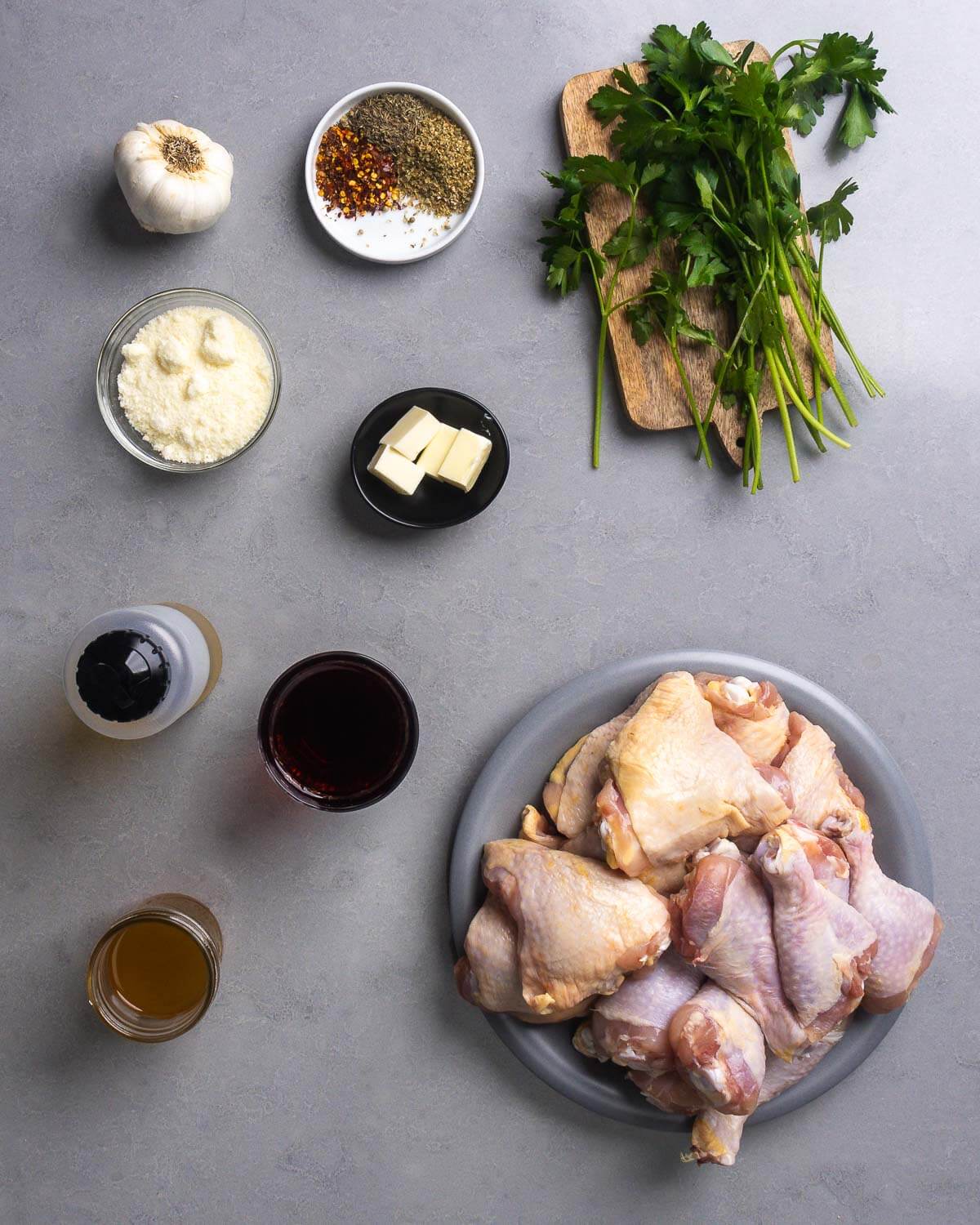
- Chicken. You can use a whole chicken cut into pieces like the Belmont Tavern does. I do that in Italian baked chicken and potatoes and chicken vesuvio. But for this chicken savoy recipe, I’m using a combination of chicken drumsticks and bone-in, skin-on chicken thighs. If you want to use breasts, I recommend using bone-in, skin-on breasts. The skin is important as the paste adheres to it better than it would to the meat. Note: If using breasts, cook to 160°F, then remove. I always prefere chicken thighs or legs for dishes like this since they do better at a higher internal temp and are much harder to overcook than white meat.
- The paste. I’m using a combination of olive oil, red pepper flakes, garlic, oregano, thyme, and Pecorino Romano for the paste. You could also use rosemary, though I find oregano and thyme work best.
- Vinegar. Chicken Savoy is characterized by the paste on the chicken, and the finish with red wine vinegar at the very end.
- Stock. Use unsalted boxed chicken stock, or my homemade chicken stock, to allow for greater control over the sodium levels in this dish. Using no-sodium stock is even more important in dishes like this one where the sauce is power-reduced.
See the recipe card for full information on ingredients and quantities.
Want To Save This Recipe?
How to make chicken savoy
Each number corresponds to the numbered written steps below.
- Pat the chicken dry with paper towels and season with salt and pepper on all sides, then sear the chicken skin-side down in a large pan over medium heat with the olive oil. Sear for 6-8 minutes or until browned, then turn the chicken pieces over and sear for another 5 minutes. Drizzle a quarter cup of red wine vinegar onto the chicken and into the pan then remove the pan from the heat.
- Place all the paste ingredients in a food processor and blend until a thick paste is formed. If the paste is too thick, add some olive oil, and if it’s too thin, add some more cheese. The ideal consistency will allow the paste to stick to the chicken and not fall off during roasting.
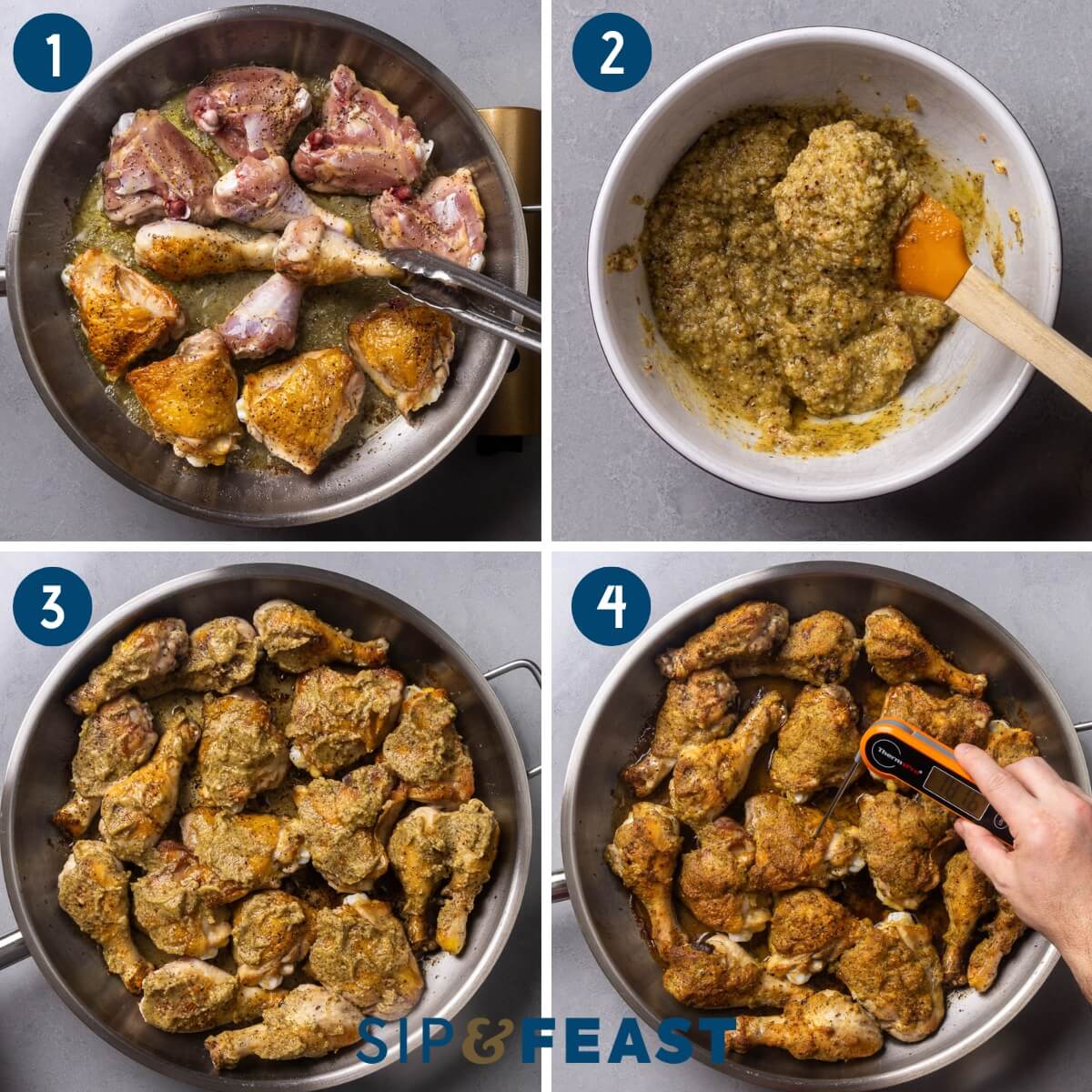
- Spread the paste on top of each piece of chicken, then place the pan in a 450°F oven to roast.
- When the chicken reaches 185°F (about 15-20 minutes), remove from the oven and transfer the chicken to a platter. Note: If using chicken breasts, remove when they reach 160°F.
- Pour the fat from the pan and place the pan on top of the stove.
- Add the vinegar and stock, turn the heat to high, and boil until the sauce reduces by half. Use a wooden spoon to scrape the pan and dislodge any brown bits.
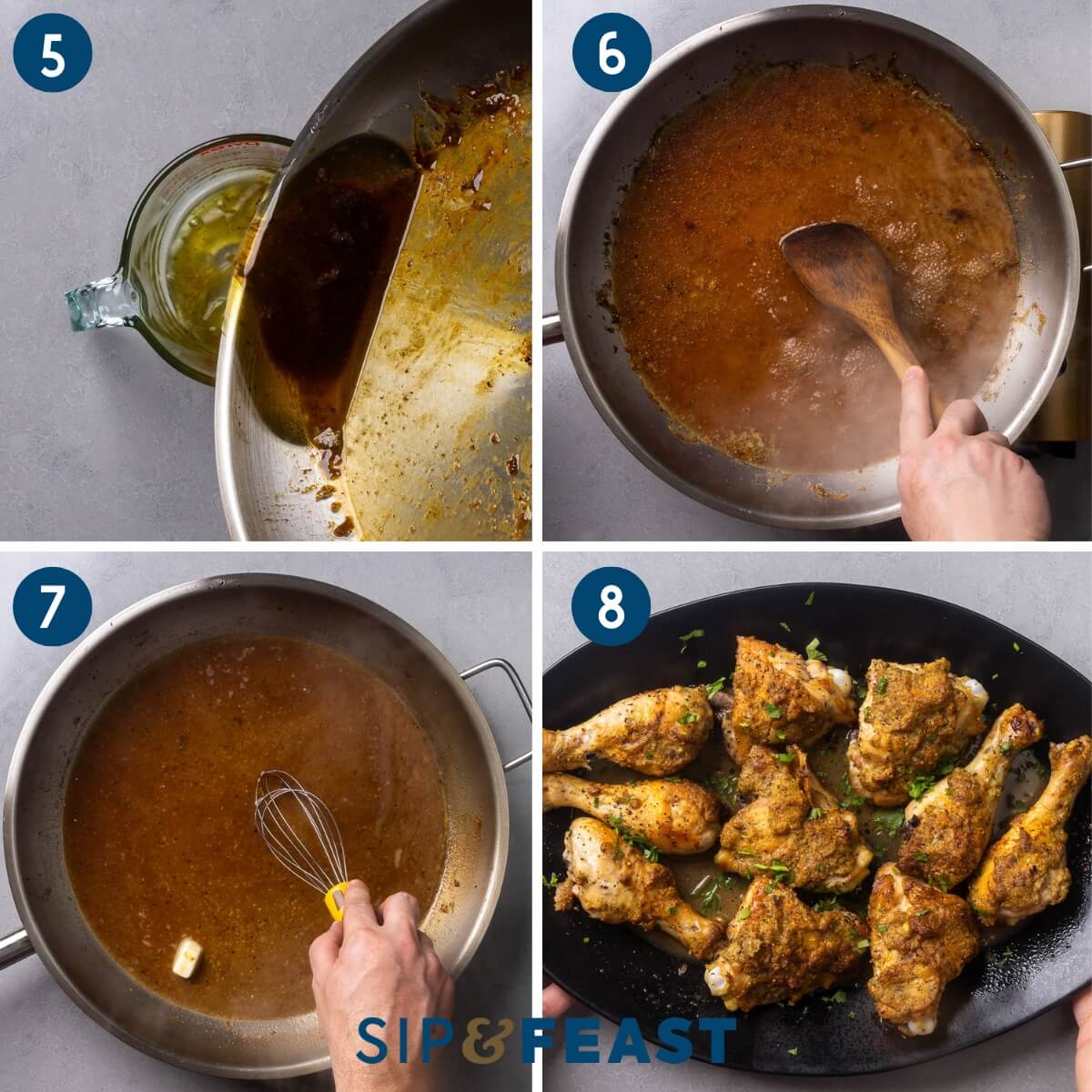
- Turn off the heat and whisk in the cold butter, one cube at a time.
- Pour the vinegar sauce onto the chicken and around the platter and finish with the parsley. Serve with crusty bread to mop up the sauce.
Top tips
- Salt the chicken overnight. Seasoning the chicken with salt overnight, placing onto a wire rack, and refrigerating uncovered, will make the chicken even juicer and more flavorful. If you forget, it’s no big deal. Simply salt and pepper the chicken before searing.
- Dry the chicken. Be sure to dry your chicken pieces very well before seasoning and searing. This helps the chicken to get a better sear and develop the beautiful brown color that chicken savoy is known for.
- The pan. I love using my large 14-inch stainless steel pan for chicken savoy and other dishes like rosemary chicken with sausage and tomatoes. Nothing allows you to get a sear the way stainless does. Just be sure to allow the pan to heat, then add the oil and the chicken. If the oil is added while the pan is cold, the chicken will stick to the pan. You can tell that the pan is properly heated when you sprinkle a few drops of water and they turn to tiny balls – this is known as the Leidenfrost effect.
- Use homemade stock. Whenever possible, I recommend using homemade chicken stock as it gives you total control over the sodium level in your dish and tastes so much better than anything in a box.
More favorite chicken recipes
Be sure to give these other winners a try!
If you’ve enjoyed this Chicken Savoy recipe, give it a 5-star rating.
Watch us on YouTube, follow along on our Facebook Page, and become a Patreon member to receive access to exclusive full-meal videos and content.
Chicken Savoy (New Jersey Classic)
Ingredients
Base ingredients
- 1/4 cup olive oil
- 2 pounds chicken legs
- 8 chicken thighs trimmed of overhanging fat
- salt and pepper to taste
- 1/2 cup chicken stock no sodium recommended
- 1 1/4 cups red wine vinegar divided
- 3 tablespoons minced flat-leaf Italian parsley
- 2 tablespoons unsalted butter cubed
For the paste
- 6 tablespoons olive oil plus more if needed
- 1 teaspoon crushed hot red pepper flakes
- 6 cloves garlic
- 1 tablespoon dried oregano
- 1 teaspoon dried thyme
- 1/2 cup grated pecorino romano
Want To Save This Recipe?
Instructions
- Preheat oven to 450°F.
- Pat the chicken pieces dry with paper towels and season with salt and pepper on all sides. Heat a large pan to medium heat with the olive oil. Add the chicken thighs skin side down and the legs and sear for 6-8 minutes or until well browned. Turn the chicken pieces and cook for another 5 minutes. Drizzle a quarter cup of red wine vinegar onto the chicken pieces and in to the pan then remove the pan from the heat.
- Place all of the paste ingredients in a food processor and blend until a thick paste forms. If the paste is too thick, add another tablespoon of olive oil. If the paste is too thin, add more grated cheese. The paste should stick onto the chicken and not fall off during roasting.
- Spread the paste on top of each chicken piece. Place the pan in the oven and roast until the chicken thighs reach an internal temp of at least 185°F (approximately 15-20 minutes).
- Remove the chicken pieces to a platter. Pour out the oil and fat from the pan, leaving the flavor bits on the bottom, and place the pan on top of a burner. Add the vinegar and stock and bring to a boil. With a wooden spoon, scrape the bottom of the pan to dislodge any brown bits. Boil until the sauce reduces by half.
- Remove the pan from the heat and whisk in the cold butter, one cube at a time.
- Pour the sauce onto the chicken and around the platter and top with parsley. Serve with crusty bread to mop up the sauce. Enjoy!
Notes
- Herbs. Different herbs can be used such as rosemary but I find oregano and thyme work best.
- Pan size. A 14-inch stainless steel pan can sear all of the chicken in one batch, but a 12-inch will work too in multiple batches.
- Chicken stock. No sodium chicken stock is best for any dish where the sauce will be concentrated and reduced.
- Leftovers. Chicken savoy can be saved in the fridge for up to 3 days and can be reheated in the microwave or oven.
Nutrition
Nutrition information is automatically calculated, so should only be used as an approximation.
Follow Me

The Sip and Feast Cookbook
- 100+ recipes
- Essential tools and ingredients
- Entertaining ides
- Stunning photography









We were at Belmont 3 weeks ago…and my husband was thrilled with tonight’s dinner…Followed exactly until the last 5 minutes. Added Vinegar/stock/butter to cast iron pan and turned on convection. He asked for ziti with pot cheese and escarole salad…since he didn’t bring cash, I told him… Next time. IYKYK
So glad you enjoyed!
Absolutely wonderful! I wouldn’t change a thing.
Glad you enjoyed, Eileen!
Jim and Tara,
My husband rates this recipe at 9:)
He says it’s more of a Sunday meal, instead of Monday
That’s falls into compliment category for me🥰
Thanks for sharing!
Carol
We’re so happy you and your husband enjoyed, Carol!
Very delicious! Will definitely make this again. I used whole legs and thighs, and served it with broccoli rabe and mashed potatoes.
So glad you enjoyed, Maria!
Very tasty – I’ll be making this again. Almost a mustard-like flavor with the seasonings and vinegar tang. I did salt the chicken overnight as suggested.
Glad you enjoyed!
love watching you, so authentic, loved all the recipes I’ve tried so far, thanks for sharing
Really looking forward to making this soon! I only have chicken quarters on hand and was thinking of making a little extra paste and using some both under the skin and on top of the skin. What does Jim think about using chicken quarters for this recipe and the paste like that?
Hi Tim, you can definitely use quarters and the paste in the way you described.
Turned out great! Have really been on a roll with your recipes!
So happy to hear that, Tim!
Can you substitute skin on chicken breast or skin on boneless thighs or boneless chicken breasts or skinless thighs??
Hi Janet, yes, Jim addresses this within the post (see ingredients section under the photo of the ingredients).
Enjoying the book. Will give this a try for sure. Any of your sides you would recommend with the chicken?
Glad you’re enjoying the book! Yes, see Jim’s note in the blue box in the beginning of the post where he links rice pilaf, creamy polenta, and garlic sauteed spinach.