

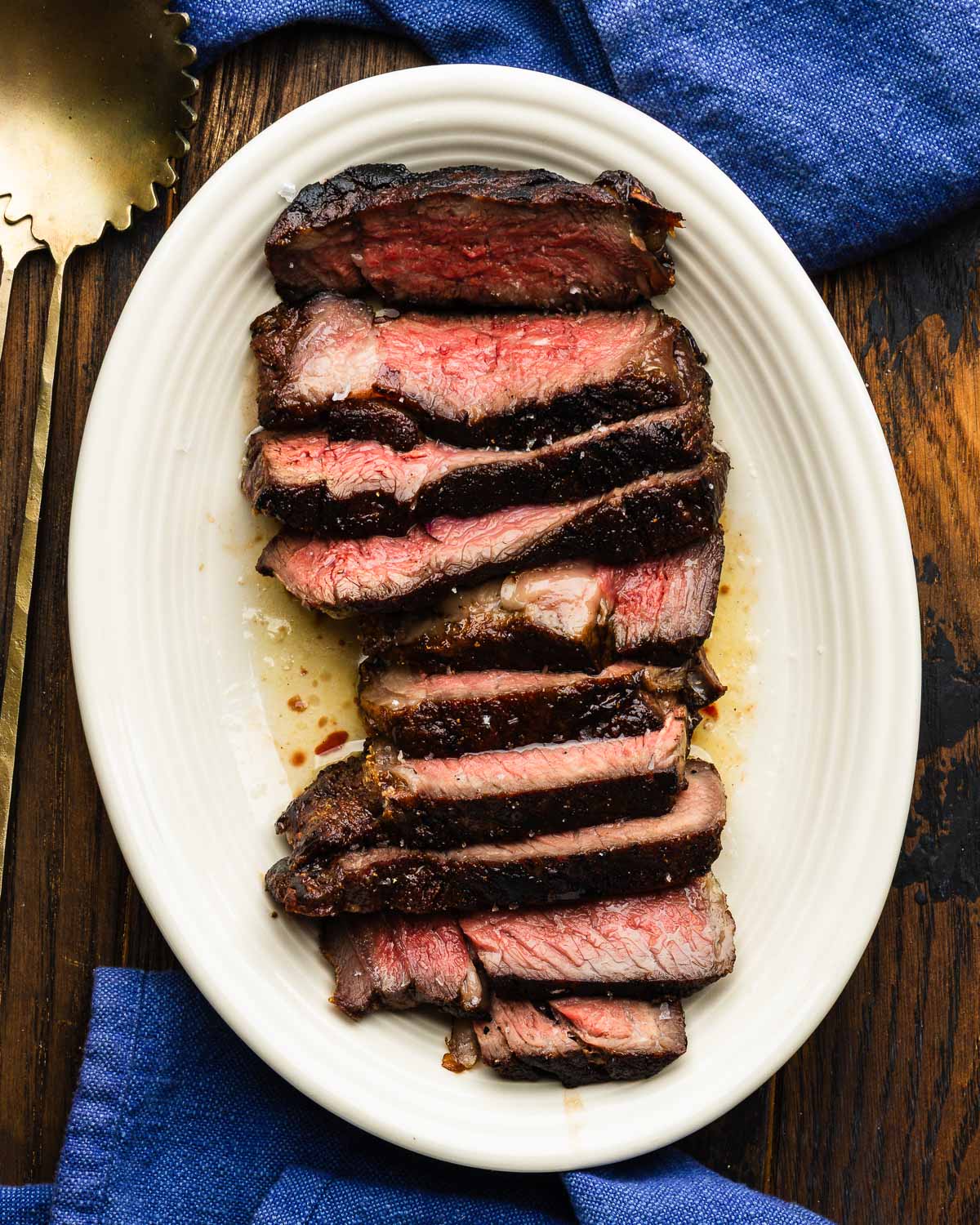
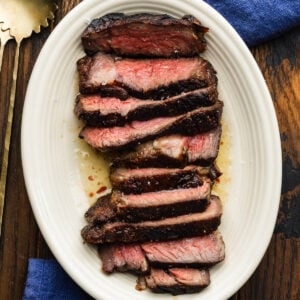
Steak can be an intimidating ingredient to work with, but my recipe for Reverse Sear Ribeye Steak provides a foolproof method to make a steakhouse-worthy meal right in your home kitchen.
This post may contain affiliate links. Our disclosure policy.

Steak Making 101
Ribeye steak, and steak in general, is one of the more expensive ingredients to cook with, and because of that, many find it intimidating. But I’m here to tell you that the reverse sear method of cooking a steak will give you great results every time!
“Reverse sear” means that you start by cooking the steak in the oven to a temperature that is about 20°F shy of the final temperature, then finish by searing it on the stovetop. For example, for medium-rare, you’d remove the steak from the oven when it reaches 110°F, and finish it in a pan until it reaches 125-130°F when checked with an instant read thermometer.
This method of making steak is nearly foolproof and is the best way to achieve restaurant-level results at home. I like to serve my reverse-sear ribeye steak with a side of creamed spinach and steakhouse homefries or roasted garlic mashed potatoes.
Recipe Ingredients
All ingredients for this recipe are shown in the pic below and special notes are made in this bulleted list to assist you.
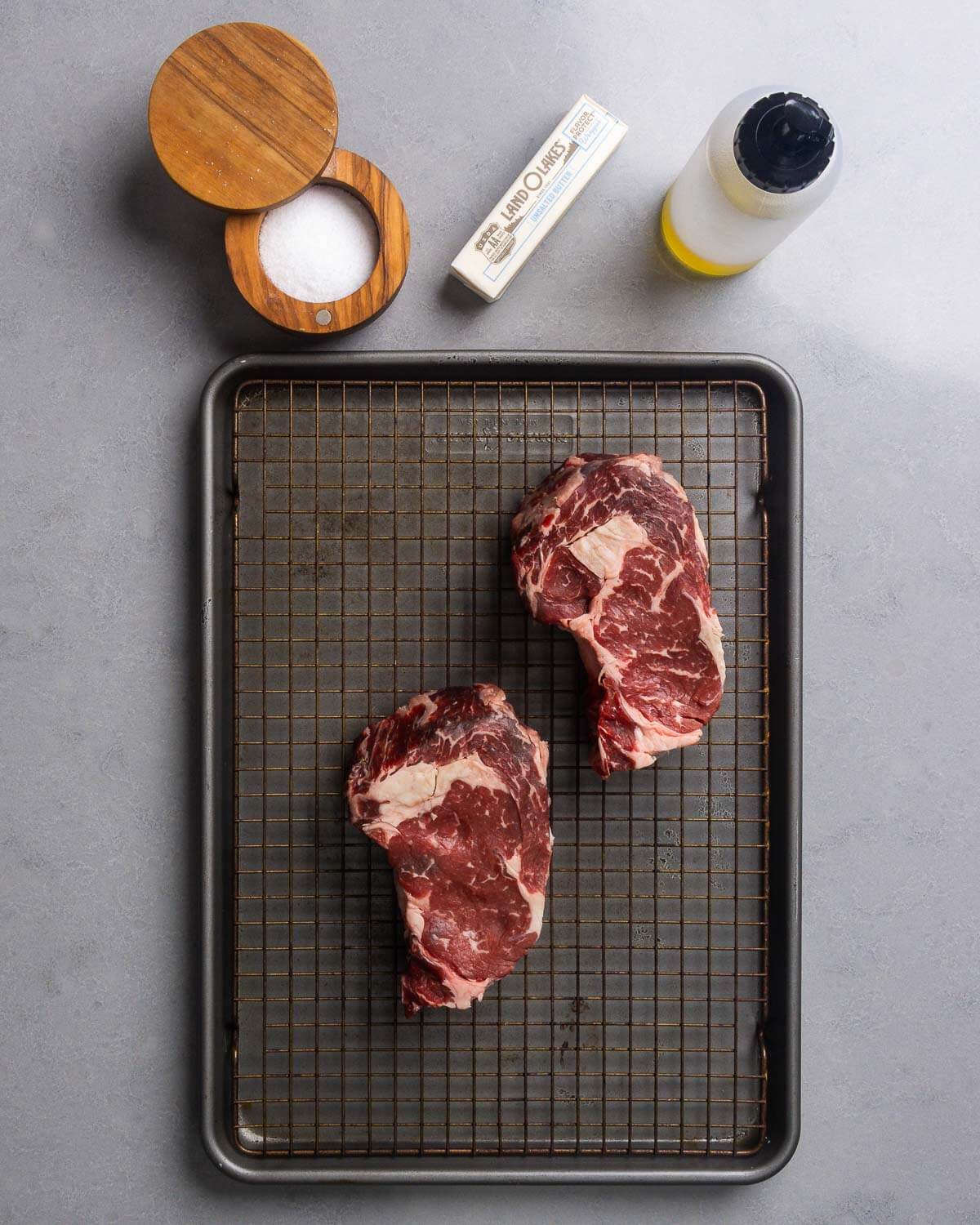
- Steak. I’m using ribeye steak, but you can use any thick-cut steak, such as a porterhouse or New York strips, which I love for steak au poivre. The reverse sear method works best on thicker steaks, so save the skirt steak for other recipes, like my steak sandwich. Prime grade is always great, but can be very expensive, so use what suits your budget.
- Salt. I’m using Diamond Crystal kosher salt for this recipe, and as far as seasoning goes, not much else is needed. I am a firm believer that all a good steak needs is salt and a little black pepper. Salt should be 1-1.25% of the weight of the steaks. So if both steaks weigh 1000 grams, you would salt at 10-12.5g or approximately 1 1/4 tablespoons of Diamond Crystal kosher salt for both steaks. Please keep in mind that this is for Diamond Crystal kosher salt, which weighs half as much by volume of table salt. You would only use a total of 1 1/2-1 3/4 teaspoons of table salt for both steaks.
- Butter and oil. The steak is seared using a neutral oil, such as avocado oil or vegetable oil, and finished with unsalted butter.
See the recipe card for full information on ingredients and quantities.
Want To Save This Recipe?
How to reverse sear a ribeye steak
Each number corresponds to the numbered written steps below.
- Pat the steaks dry with paper towels and season with salt and pepper on both sides. Place on a wire rack pan and store in the fridge, uncovered, overnight and remove from the fridge 1 hour before cooking. Note: If you’re in a rush, you can just let the steak sit at room temperature for 1 hour after seasoning.
- Preheat the oven to 250°F and probe the steak with an oven-safe digital thermometer.
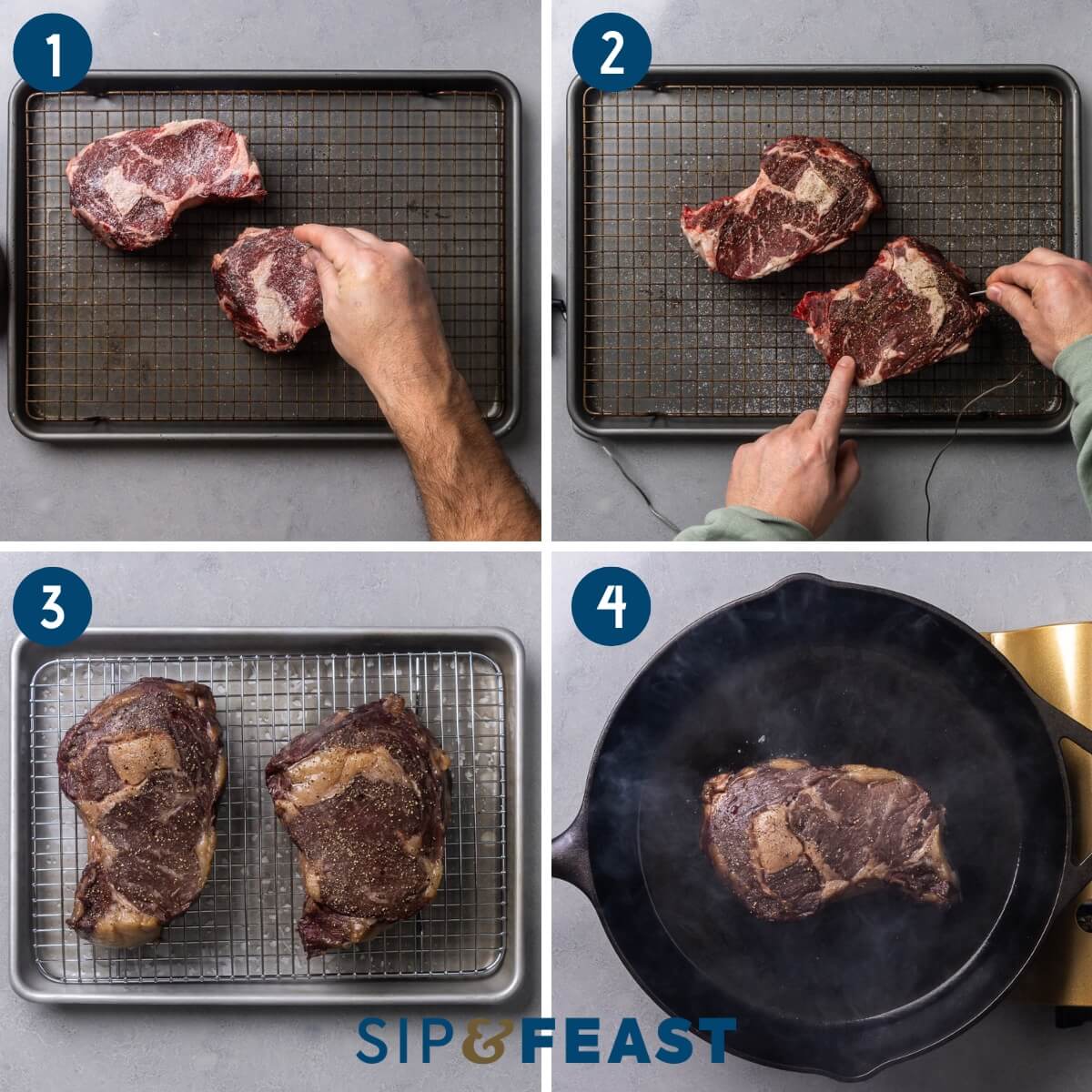
- Cook the ribeye steaks in the oven until they reach 110°F (for medium-rare). If you prefer a more well-done steak, remove it from the oven when it is 20°F shy of the final temp you like your steak (see reference chart below). Remove the steaks and allow them to rest for 15 minutes before searing.
- Preheat a cast-iron or heavy steel pan to medium-high heat and allow 4-5 minutes to get very hot. Be sure to turn on an exhaust vent because the searing process will create smoke. Add the neutral oil to the pan and once shimmering, add the steak.
- Sear for 1 minute per side.
- Use tongs to hold the steak to sear the sides for 30-45 seconds per side.
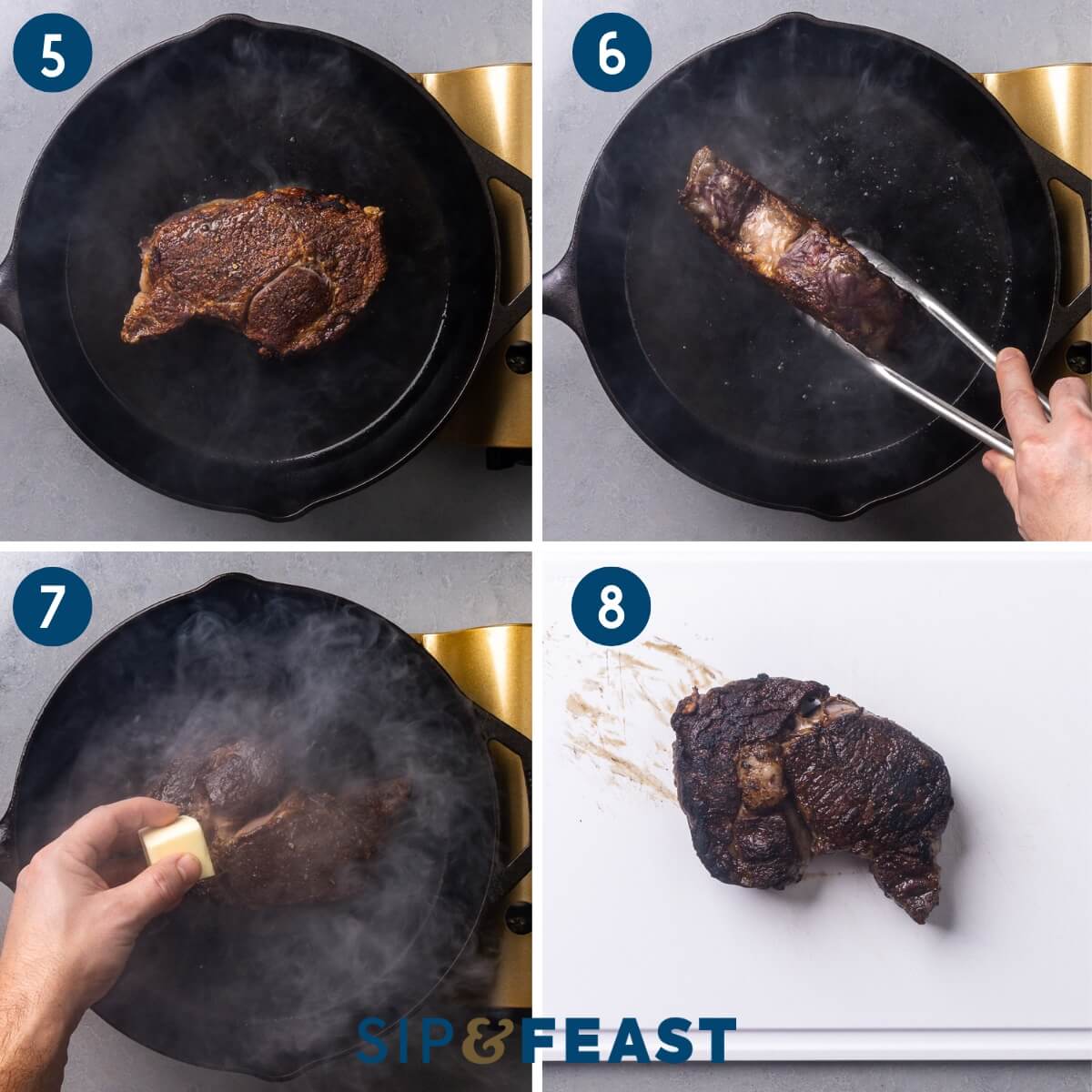
- Add the butter during the last 30 seconds of searing and use it to baste the steaks.
- Remove the pan from the burner, transfer the steaks to a cutting board, and wait 5 minutes before slicing. Place the steak slices onto a platter and pour the butter mixture over the top and serve immediately.
| Doneness | Temp to remove from oven | Final temp after searing and resting |
| medium-rare | 110°F | 125°F-130°F |
| medium | 125°F | 140°F-145°F |
| medium-well | 135°F | 150°F-155°F |
Top tips
- Salting the steak. A good steak doesn’t need much seasoning, but be sure you’re using the right amount of salt. Reference my salt level note in the recipe card. I also recommend salting the steak overnight if possible.
- Use the right tools. An oven-safe probe thermometer allows you to monitor the temperature of your steak without opening the oven. I suggest using one for reverse-sear steak. Be sure to use a heavy pan, such as cast iron or stainless steel.
- Let it sit. It’s important to let the steak sit for 5 minutes or so before slicing, as this allows the steak to reabsorb some of the juices.
More steak recipes
If you love steak, here are a few more of my favorite recipes to try.
- Ribeye steak with red wine reduction
- Grilled tomahawk steak with compound butter
- NY strip steak with gorgonzola sauce
- Steak tagliata
If you’ve enjoyed this Reverse Sear Ribeye Steak recipe, give it a 5-star rating.
Watch us on YouTube, follow along on our Facebook Page, and become a Patreon member to receive access to exclusive full-meal videos and content.
Reverse Sear Ribeye Steak
Ingredients
- 2 large thick ribeye steaks
- 1 tablespoon Diamond crystal kosher salt
- black pepper to taste
- 3 tablespoons neutral oil
- 4 tablespoons salted butter
Want To Save This Recipe?
Instructions
- Pat steaks dry, then season with salt and pepper on both sides. Place the steaks in the fridge overnight on a wire rack, uncovered, then remove 1 hour prior to cooking. If you're in a rush and didn't salt overnight, let the steak sit at room temp for 1 hour after salting. Note: See notes below on salting properly by weight of the steak.
- Preheat oven to 250°F.
- Probe the center with an oven-safe digital thermometer. Place steaks in the oven and cook until the steaks reach 110°F for medium-rare. If you prefer a more cooked steak, just make sure to remove it from the oven when it reaches 20°F less than the final temp you like your steak. Note: Time will vary based on the thickness and size of the steak. If using an instant-read thermometer, start checking the temperature of thick steaks at the 30-minute mark and thinner one after 20 minutes.
- Remove the steaks and let rest for 15 minutes before searing.
- Preheat cast iron or heavy stainless steel skillet to medium-high heat. Give it 4-5 minutes to get very hot. Make sure to turn on exhaust vent because the searing process will create plenty of smoke.
- Add the neutral oil to the pan and once it shimmers add the steaks. Sear for 1 minute per side, and with tongs, hold the steaks to sear the sides for another 30 seconds on each side.
- Add the butter during last 30 seconds of searing and baste the steaks.
- Remove pan from the burner and steaks to a cutting board and wait 5 minutes before slicing. Place sliced steak pieces into platter and pour the butter mixture over top and serve immediately. Enjoy!
Notes
- Size and type of steaks. This recipe will work just as well with any thick steak. A porterhouse or NY strip would also make a perfect steak.
- Salt levels. Salt should be 1-1.25% of the weight of the steaks. So if both steaks weigh 1000g you would salt at 10-12.5g or approximately 1 1/4 tablespoons of Diamond Crystal kosher salt for both steaks. Please keep in mind that this is for Diamond Crystal kosher salt which weighs half as much by volume as table salt. You would only use a total of 1 1/2-1 3/4 teaspoons of table salt for both steaks.
- Internal temp. Make sure to cook the steak to less than 20°F of the temp you would like. Medium–rare = 125°F-130°F final resting temp, medium = 140°F-140°F final resting temp, medium–well = 150°F-155°F final resting temp.
- Pan. A cast iron or stainless steel pan works well for this recipe. Make sure to get the pan very hot and to have plenty of ventilation for the smoke. Do not use a nonstick pan.
- Leftovers. Steak is best eaten right away since it will become well done after reheating. The best way to reheat some leftover steak is to pan fry the pieces in butter until warmed through.
Nutrition
Nutrition information is automatically calculated, so should only be used as an approximation.
Follow Me

The Sip and Feast Cookbook
- 100+ recipes
- Essential tools and ingredients
- Entertaining ides
- Stunning photography
This recipe was originally published on July 24, 2018. It was completely updated on February 9, 2026.
Reverse Sear Ribeye Steak
Ingredients
- 2 large thick ribeye steaks
- 1 tablespoon Diamond crystal kosher salt
- black pepper to taste
- 3 tablespoons neutral oil
- 4 tablespoons salted butter
Want To Save This Recipe?
Instructions
- Pat steaks dry, then season with salt and pepper on both sides. Place the steaks in the fridge overnight on a wire rack, uncovered, then remove 1 hour prior to cooking. If you're in a rush and didn't salt overnight, let the steak sit at room temp for 1 hour after salting. Note: See notes below on salting properly by weight of the steak.
- Preheat oven to 250°F.
- Probe the center with an oven-safe digital thermometer. Place steaks in the oven and cook until the steaks reach 110°F for medium-rare. If you prefer a more cooked steak, just make sure to remove it from the oven when it reaches 20°F less than the final temp you like your steak. Note: Time will vary based on the thickness and size of the steak. If using an instant-read thermometer, start checking the temperature of thick steaks at the 30-minute mark and thinner one after 20 minutes.
- Remove the steaks and let rest for 15 minutes before searing.
- Preheat cast iron or heavy stainless steel skillet to medium-high heat. Give it 4-5 minutes to get very hot. Make sure to turn on exhaust vent because the searing process will create plenty of smoke.
- Add the neutral oil to the pan and once it shimmers add the steaks. Sear for 1 minute per side, and with tongs, hold the steaks to sear the sides for another 30 seconds on each side.
- Add the butter during last 30 seconds of searing and baste the steaks.
- Remove pan from the burner and steaks to a cutting board and wait 5 minutes before slicing. Place sliced steak pieces into platter and pour the butter mixture over top and serve immediately. Enjoy!
Notes
- Size and type of steaks. This recipe will work just as well with any thick steak. A porterhouse or NY strip would also make a perfect steak.
- Salt levels. Salt should be 1-1.25% of the weight of the steaks. So if both steaks weigh 1000g you would salt at 10-12.5g or approximately 1 1/4 tablespoons of Diamond Crystal kosher salt for both steaks. Please keep in mind that this is for Diamond Crystal kosher salt which weighs half as much by volume as table salt. You would only use a total of 1 1/2-1 3/4 teaspoons of table salt for both steaks.
- Internal temp. Make sure to cook the steak to less than 20°F of the temp you would like. Medium–rare = 125°F-130°F final resting temp, medium = 140°F-140°F final resting temp, medium–well = 150°F-155°F final resting temp.
- Pan. A cast iron or stainless steel pan works well for this recipe. Make sure to get the pan very hot and to have plenty of ventilation for the smoke. Do not use a nonstick pan.
- Leftovers. Steak is best eaten right away since it will become well done after reheating. The best way to reheat some leftover steak is to pan fry the pieces in butter until warmed through.
Nutrition
Nutrition information is automatically calculated, so should only be used as an approximation.
Follow Me
The Sip and Feast Cookbook
- 100+ recipes
- Essential tools and ingredients
- Entertaining ides
- Stunning photography









I always ruin ribeyes, but mine came out perfect this time. Thanks so much for this easy recipe.
The only method I used to cook steaks. Thanks James and Tara!
So happy to hear that, Rosemary!