

Italian Easter bread is a wonderful combination of braided brioche bread with an Easter egg in the center. This bread is slightly sweet and is as fun to eat as it is to make!

This post may contain affiliate links. Our disclosure policy.
Italian Easter bread is a wonderful breakfast treat to make for Easter morning.
The sweet brioche dough can be made and braided a day ahead, then baked Easter morning.
The eggs themselves are not boiled in water, rather they’re colored ahead of time and baked in the oven with the brioche to yield a perfect hardboiled egg to eat on its own, but also great for deviled eggs and deli-style egg salad!
These Easter brioche breads are slightly sweet, and are so much fun to make and eat!
Want To Save This Recipe?
If you’re a fan of eggs, we also recommend torta Pasqualina, which is a savory green pie that’s also served Easter morning!

How to make it
Each number corresponds to the numbered written steps below.
- In the bowl of a stand mixer fitted with a paddle attachment, add 5 cups (625 grams) of all-purpose flour, 3 teaspoons of instant dry yeast, 1/2 teaspoon of fine sea salt, 1/2 cup (120 grams) of granulated sugar and 2 tablespoons of lemon zest. Mix on low speed until combined.
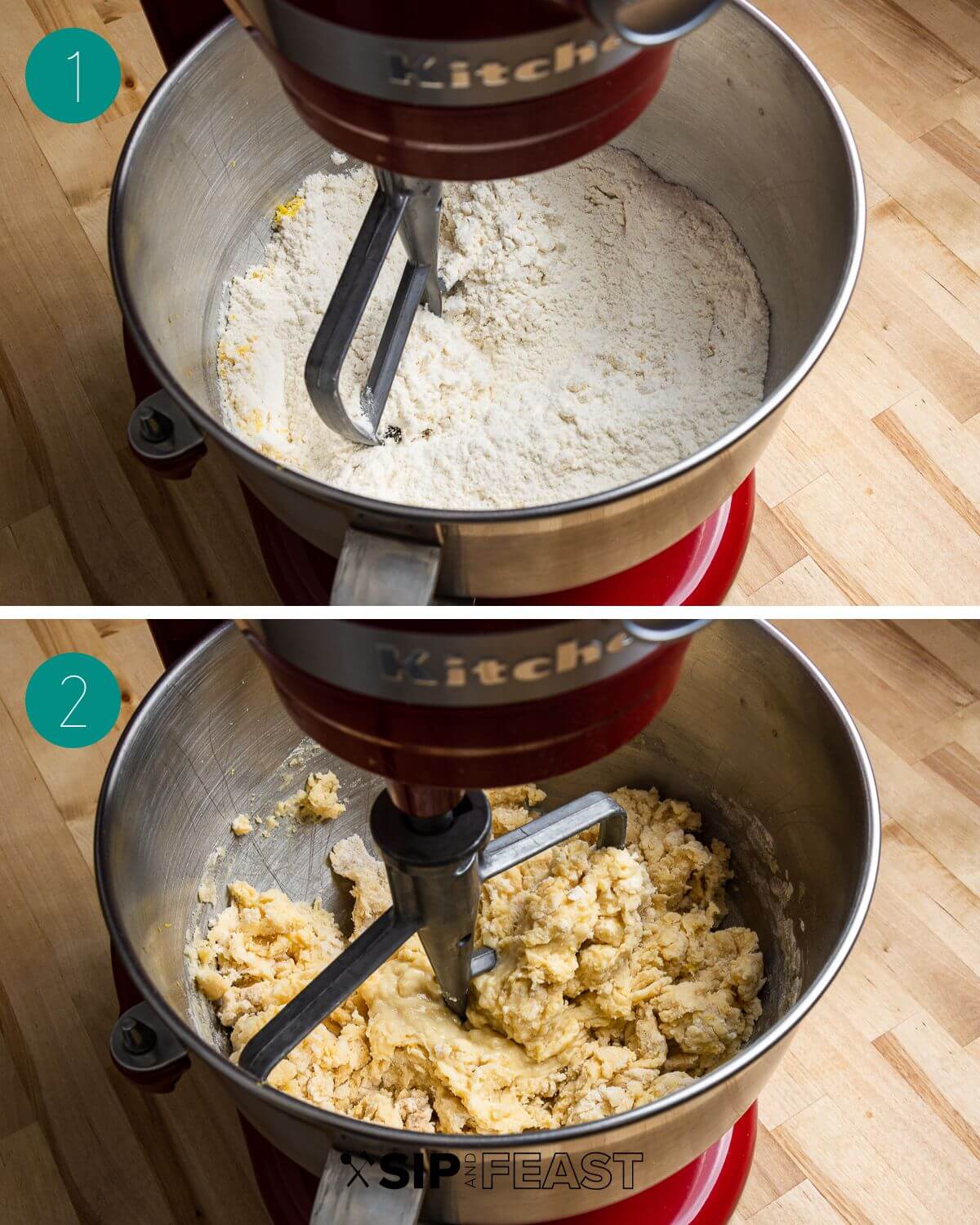
- Beat together 3 eggs, then add them to the mixer along with 1 cup (240 grams) of warmed whole milk, 11 tablespoons (156 grams) of melted butter, and 1 tablespoon of vanilla extract. Use the paddle attachment to mix for 1 minute.
- Remove the paddle attachment and switch to the dough hook and knead on a low to medium speed for 8 minutes.
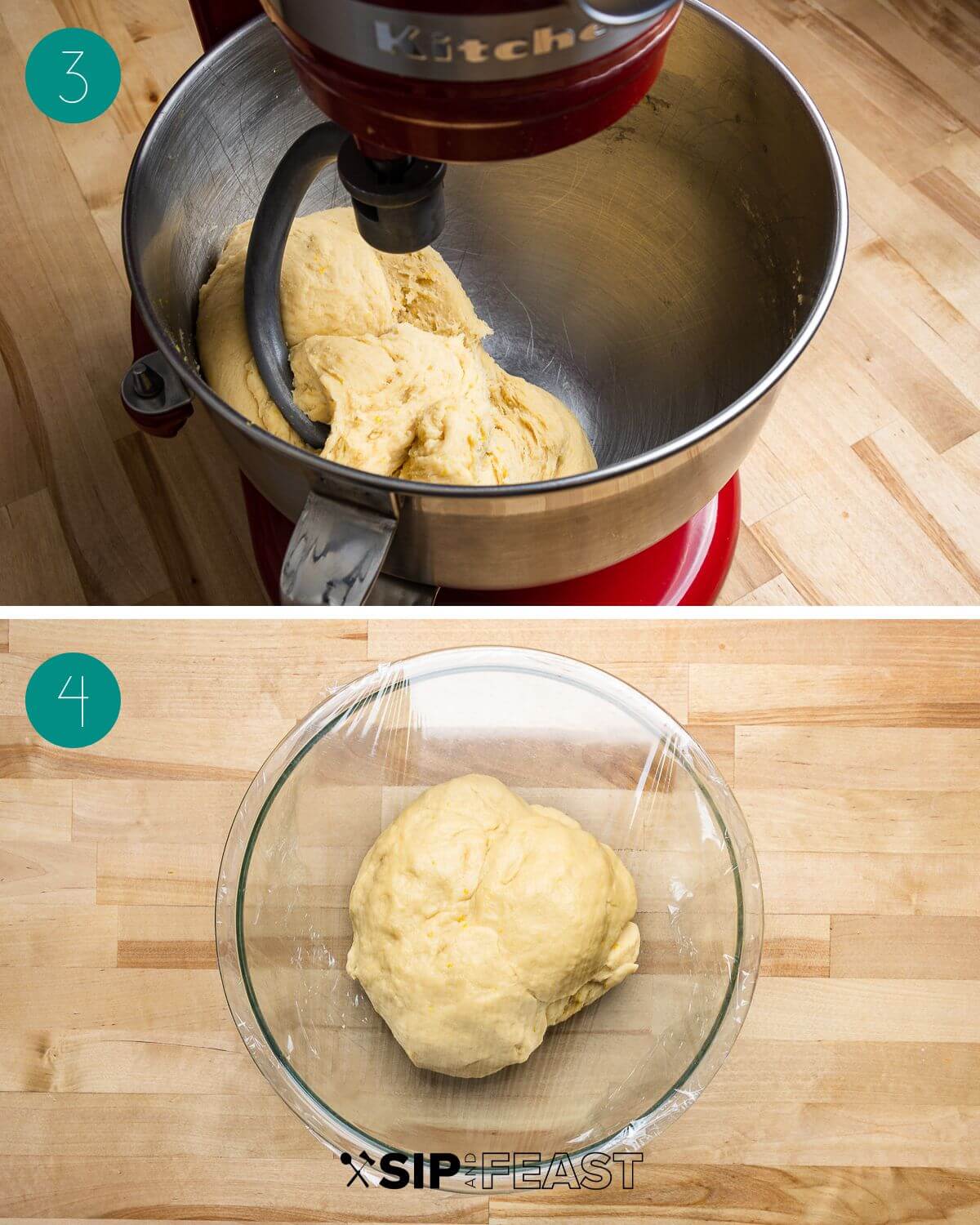
- Remove the dough and transfer to a lightly oiled bowl and cover it with plastic wrap. Allow the dough to rise in a warm place for 2-3 hours, or until it doubles in size.
- While the dough is resting, begin to color 8 large uncooked eggs with your choice of food coloring and allow them to dry completely. Before using the eggs, give them a light rinse and dry them off to help prevent the color from bleeding onto the dough. After 2-3 hours, move the dough to a lightly floured work surface and cut it into 8 equal-sized pieces, then cut each of those in half until you have 16 pieces total.
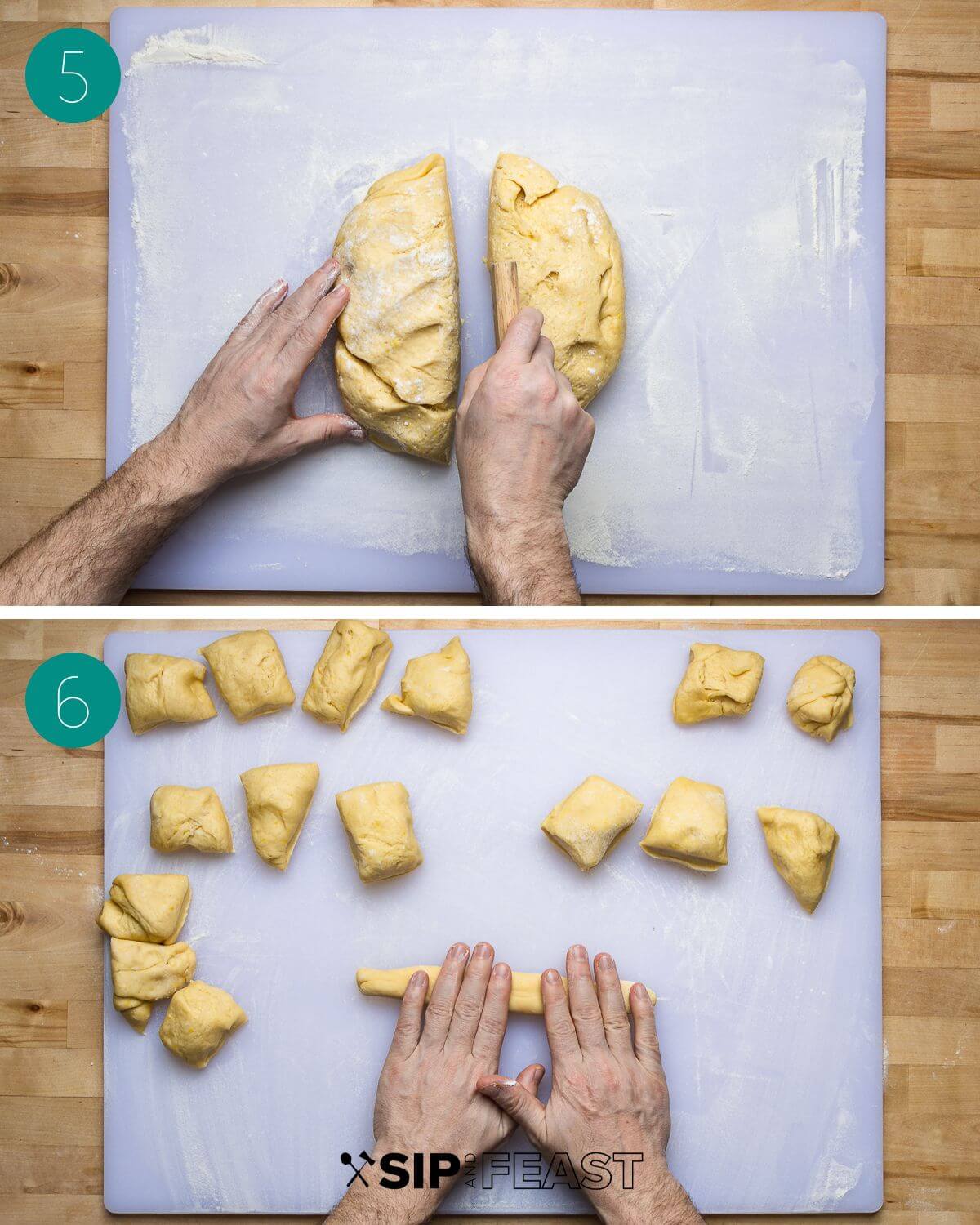
- Begin to shape and roll each piece into a 10-12 inch long rope.
- Attach two pieces together on one end. Note: the floured surface might make it difficult to stick the ends of the rope together. A bit of water is all you need to get them to stick.
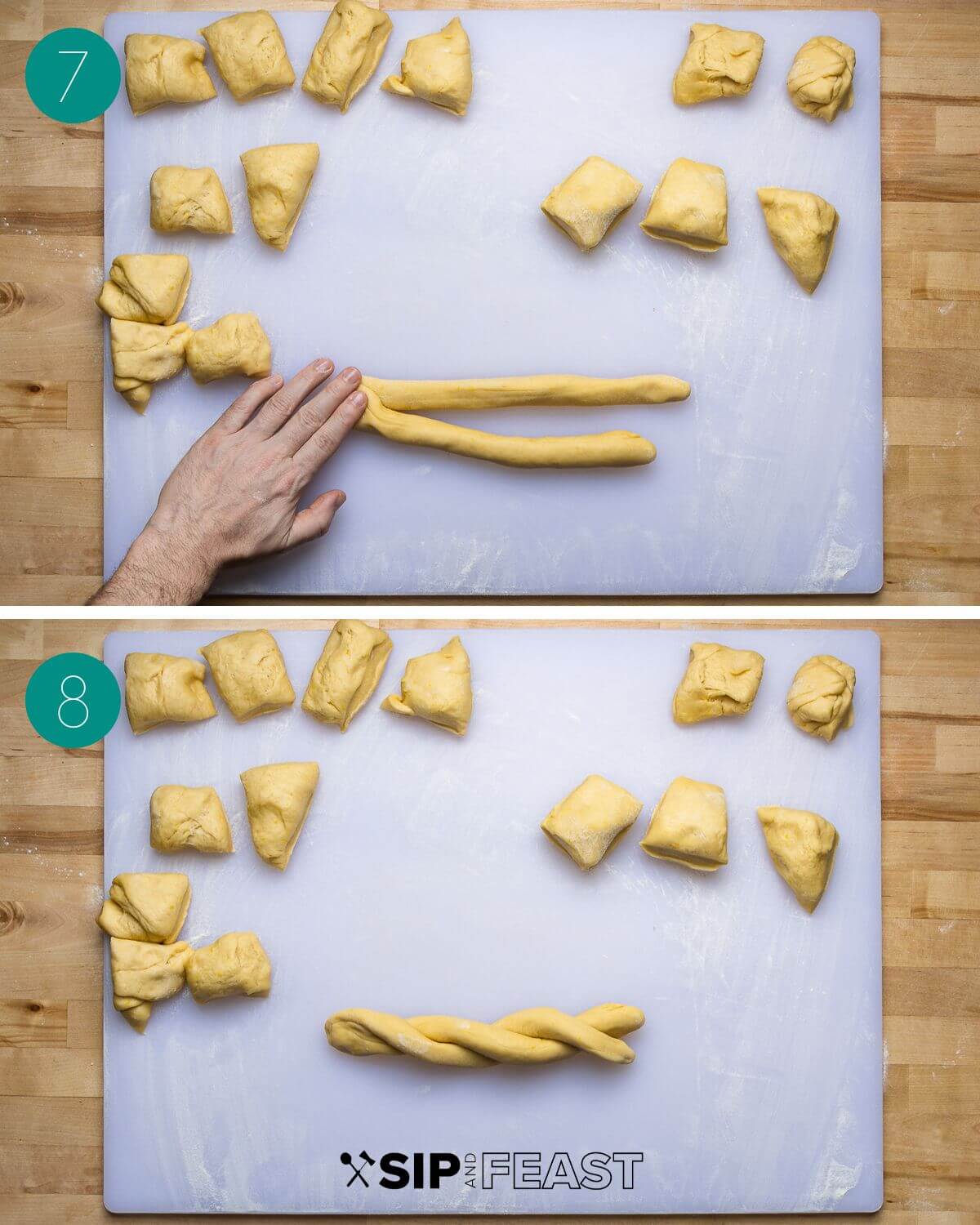
- Braid the two pieces together as shown.
- Place the dough onto a parchment paper-lined baking sheet and bring the top and bottom together to form a circle and pinch the end to seal. Cover the baking tray with plastic wrap and allow the Easter bread to rise for another 30 minutes. While the dough sits, preheat the oven to 350f. Note: you can also opt to make longer-style double wreaths or nests by using more dough.
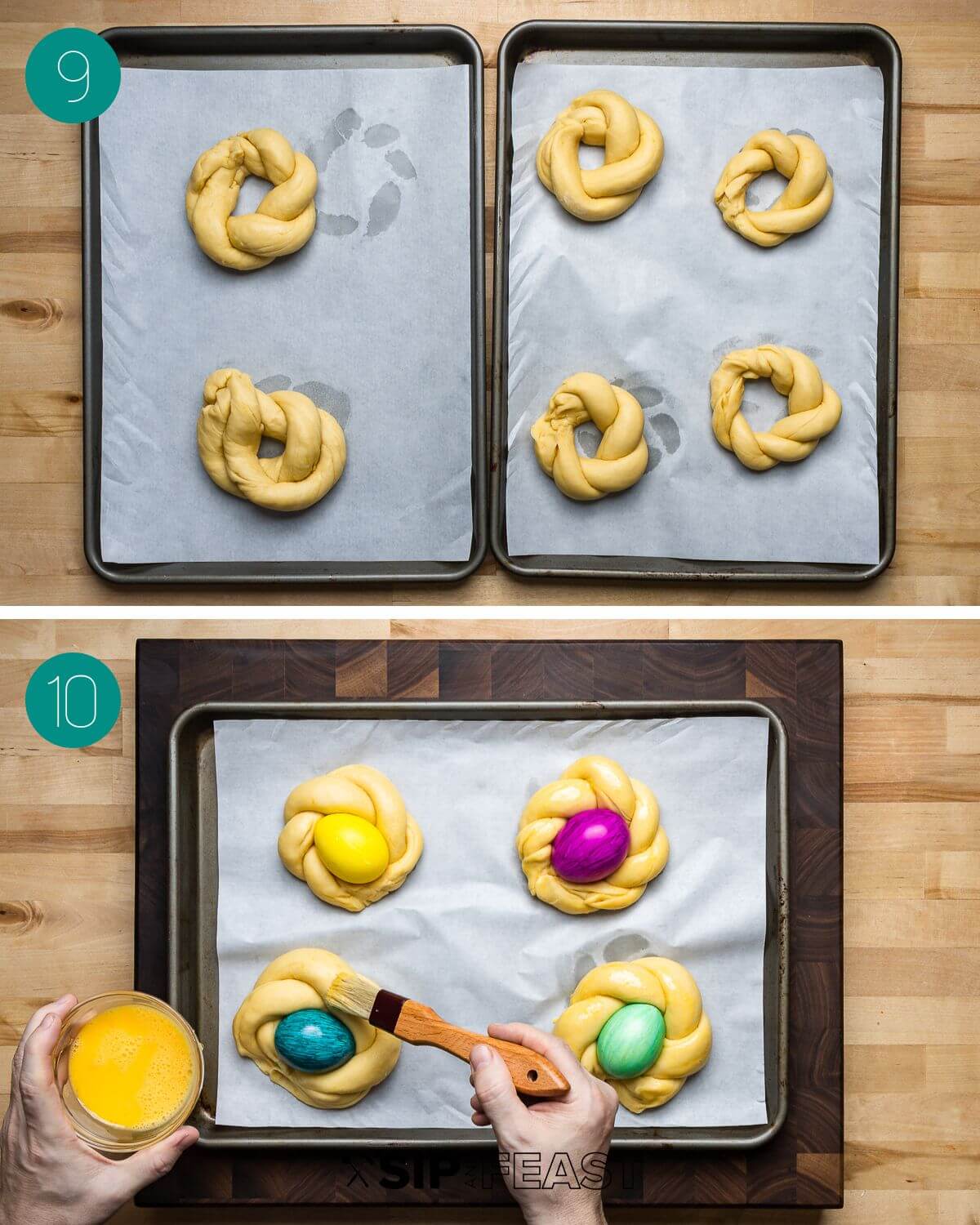
- After 30 minutes, insert a colored egg into the center and repeat the process for the remaining dough. Beat one egg and 1 tablespoon of water together and with a pastry brush, paint the egg wash onto the braided dough.
- Top the dough with sprinkles.

- Bake the bread in the oven for 20-25 minutes or until golden. Serve immediately and enjoy!
Top tips
- Cups vs. Grams. We always recommend opting for grams over cups when baking. Using grams will yield consistent results while cups tend to fluctuate depending on who’s measuring, the cups being used, how it’s spooned, leveled, humidity, etc. It’s well worth it to purchase a kitchen scale.
- Bread color. If you’d like even more browning of the bread, you can add 1-2 teaspoons of diastatic malt powder to the dough.
- Egg color. We used markers specifically made to color Easter eggs. While not as fun as the old-fashioned way, it was definitely quicker. To help prevent bleeding into the dough, run the eggs under water quickly and then gently pat them dry before nestling into the dough. Though, you can see the colors still bled a bit onto our dough. One way to get a perfect looking Easter bread is to bake the loaves with white eggs, then switch to colored eggs in the centers before serving.
- How to eat. For maximum deliciousness, we recommend eating the warm bread and egg shortly after they come out of the oven.
- Day ahead. You can make the dough the day before, assemble the wreaths, and allow them to sit in the fridge overnight. Add the eggs before you’re about to bake them to prevent bleeding into the dough overnight. You can also use leftovers to make French toast!

More Easter goodies
Easter is a festive day for many; it’s a day to celebrate through food, especially for those who have had a Lenten fast. Here are a few of our favorite Easter foods!
- Pizzagaina – also known as pizza rustica, this savory pie is loaded with ricotta, mozzarella, mortadella, salami, and more.
- Struffoli – tiny fried balls dipped in orange juice and honey and topped with nonpareils.
- Pastiera Napoletana – this sweet grain pie loaded with ricotta and orange zest is a must for Easter!
- Roasted boneless leg of lamb – with rosemary and garlic, this lamb is wonderfully juicy and perfect for Easter.
If you’ve enjoyed this Italian Easter Bread Recipe or any recipe on this site, give it a 5-star rating and tell us about it in the comments below.
We strive to satisfy a number of learning styles. If you are someone who prefers to learn by watching, you can find most of our recipes on YouTube and our Facebook Page.
For more never-before-seen FULL MEAL RECIPE VIDEOS, become a Patreon member today!
Italian Easter Bread

Ingredients
For the dough
- 5 cups (625 grams) all-purpose flour
- 3 teaspoons instant dry yeast
- 1/2 teaspoon fine sea salt
- 1/2 cup (120 grams) granulated sugar
- 2 tablespoons lemon zest or the zest of 2 lemons
- 11 tablespoons (156 grams) unsalted butter melted
- 1 cups (240 grams) whole milk warmed
- 3 large eggs beaten
- 1 tablespoon vanilla extract
remaining ingredients
- 8 large eggs whole uncooked eggs in their shells
- food coloring for eggs
- 1 large egg for egg wash
- Easter pastel sprinkles
Want To Save This Recipe?
Instructions
For the dough
- Combine the flour, yeast, salt, sugar, and lemon zest in a stand mixer and combine.
- Add the beaten eggs, warmed milk, melted butter, and vanilla. Use the paddle attachment for 1 minute then switch to the bread hook and knead for 8 minutes on a low to medium speed.
- Remove the dough and transfer to a lightly oiled bowl and cover with plastic wrap. Let the dough rise in a warm place for 2-3 hours or until it doubles in size.
Coloring the eggs
- Color raw (preferably white) eggs with your choice of food coloring, then let them dry completely. Before using the eggs lightly rinse and dry the eggs. This will help prevent the egg coloring from bleeding onto the dough.
Making the Easter bread
- After two hours move the dough to a lightly floured work surface. Cut the dough into 8 equal-sized pieces. Cut those pieces in half for a total of 16 pieces.
- Shape and roll each piece into a roughly 10-12 inch rope.
- Attach two pieces together on one end then form a braid and then a circle shape. Pinch the other end together and place each circle on a parchment paper-lined baking sheet. Repeat the process for the remaining dough, then insert a colored egg into the center of each wreath. Note: You can opt to make longer-style double wreaths by using more dough. The choice is yours.
- Cover the baking tray with plastic wrap and allow the Easter bread to rise for another 30 minutes.
- Preheat oven to 350f.
- Beat the egg and 1 tablespoon of water together to make an egg wash.
- Lightly brush each circle of braided dough with the egg wash then top with sprinkles. Bake the Easter bread for 25 minutes or until golden and serve right away.
Notes
- Using a scale is recommended for accurate results but this recipe’s measurements aren’t too critical. If using cups, avoid packing the flour into the cup.
- Diastatic malt powder can be used (no more than 2 teaspoons) to increase the browning of the bread.
- The bread is best baked and eaten the same day, but the dough can be prepared a day in advance and refrigerated overnight. The dough will need to warm up for 2-3 hours outside of the fridge before using the next day.
- Leftovers can be saved for up to 5 days and is excellent for French toast.
Nutrition
Nutrition information is automatically calculated, so should only be used as an approximation.
Follow Me

The Sip and Feast Cookbook
- 100+ recipes
- Essential tools and ingredients
- Entertaining ides
- Stunning photography









Thank you so much for the recipe I made it to times and they are very soft and delicious I made the dough the day before l let it rise for 3 hours at room temperature and placed it in the fridge for the next day they turned out beautiful and everyone loved the I will make them again soon thanks again for the recipe
I must say while following the recipe i found it easy it smelled great and the texture of the dough was just like my Italian mom made. As it was rising omg even better the smell the texture couldn’t wait to bake it. Than I saw the comment about it tasting better the day it’s baked. My guest were coming the following day so I took a chance at the suggestion of putting it in the fridge and baking it the next day. That where it earned the two stars. It did not after the suggested 2 hours out on the counter, bake well. It was flat no rise and dryyyy! The eggs also did not cooks. They were raw. So I would say cook it the same day you prepare the dough and for sure cook the eggs before adding to the raw dough
Sorry to hear you didn’t have success with the recipe.
The best and most detailed Easter bread recipe on the web! I followed the recipe almost exactly, except for subbing orange rind for lemon. Since my family likes a sweater bread, I doubled the sugar.
Regarding storing of the individual breads, I know you say leftovers can be saved for up to 5 days. Do you mean at room temp, or in the fridge? I’ve heard that bread can stale quickly in the refrigerator. Also, obviously you cannot eat the leftover eggs, unless you refrigerate the breads, but what about freezing the breads? Should you remove the hardboiled egg from the bread before freezing, or does it matter? I’ve read that Easter bread can be frozen, double wrapped in plastic wrap plus foil, for up to 2 months. Love your foolproof recipes and videos, and enjoying your book, a Christmas gift from my son 🙂
Hi Christi, you can freeze them but we do recommend removing the eggs before doing so. So glad you enjoyed!