

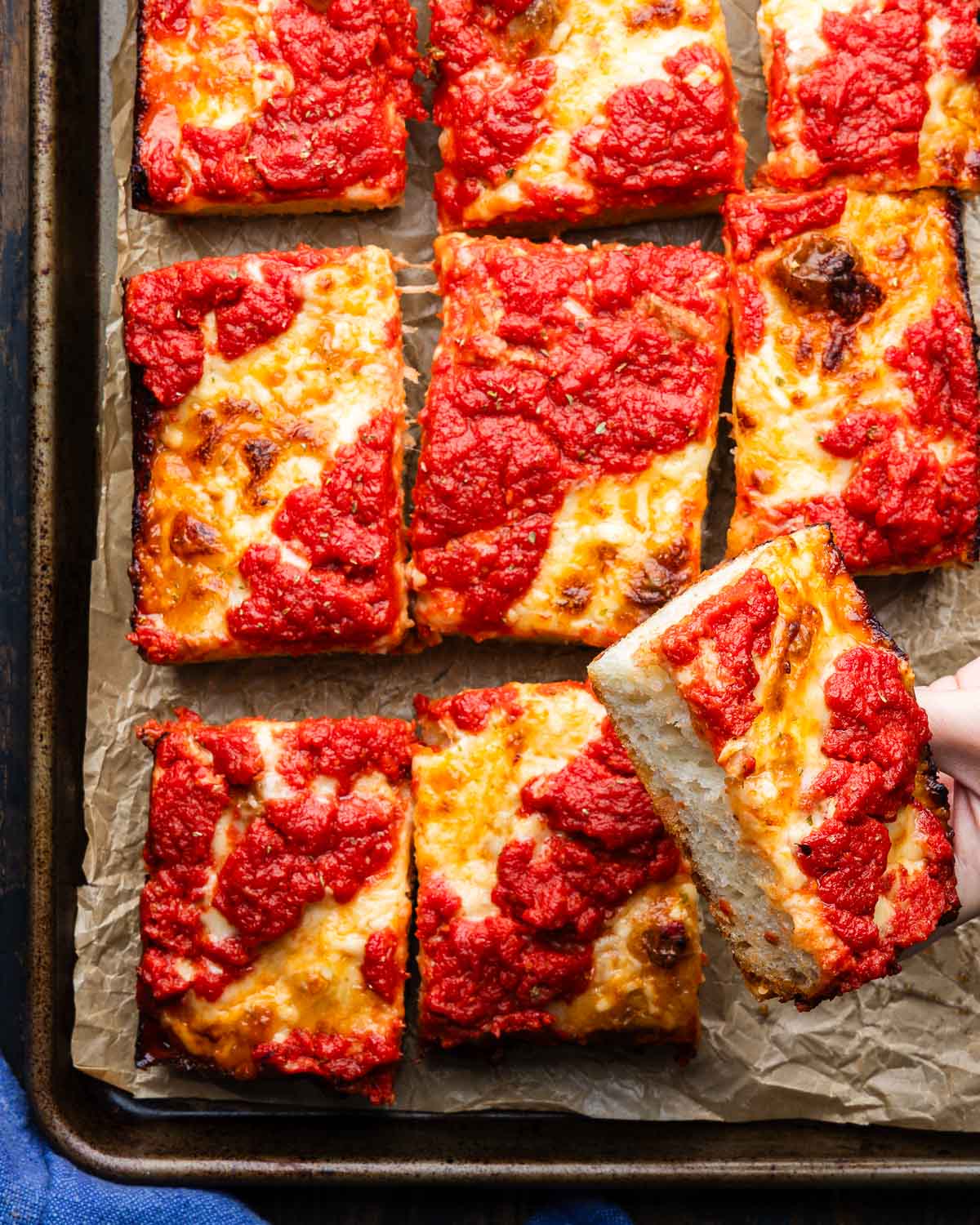
With its fluffy inside and crispy edges, Detroit-Style Pizza is a thing of beauty. The dough requires no kneading, making it easier than some other styles of pizza and most definitely doable for a home cook – no fancy pizza oven required!
This post may contain affiliate links. Our disclosure policy.

The Motor City Classic
I’ve been making pizza for years now and strive always to bring you the most authentic, stringently tested pizza recipes I can. While I’ve had my New York round pizza, grandma pizza, and others here on the website for a while, it took me some time to share my Detroit Style Pizza recipe because I wanted to nail it.
I’m excited to share this “Motor City Pizza” recipe with you because it’s not only delicious, but I found that the dough is easier to make, thanks to it not requiring any kneading, just some bowl folds. The stretch-and-fold technique you’ll see outlined and shown below is much easier than kneading, and the high-hydration dough yields an incredibly airy texture that’s more like focaccia than the styles of pizza I’m used to.
In short, this is quickly becoming a favorite pizza in our home, and I can’t wait to hear how you like it!
Recipe Ingredients
All ingredients for this recipe are shown in the pic below and special notes are made in this bulleted list to assist you.
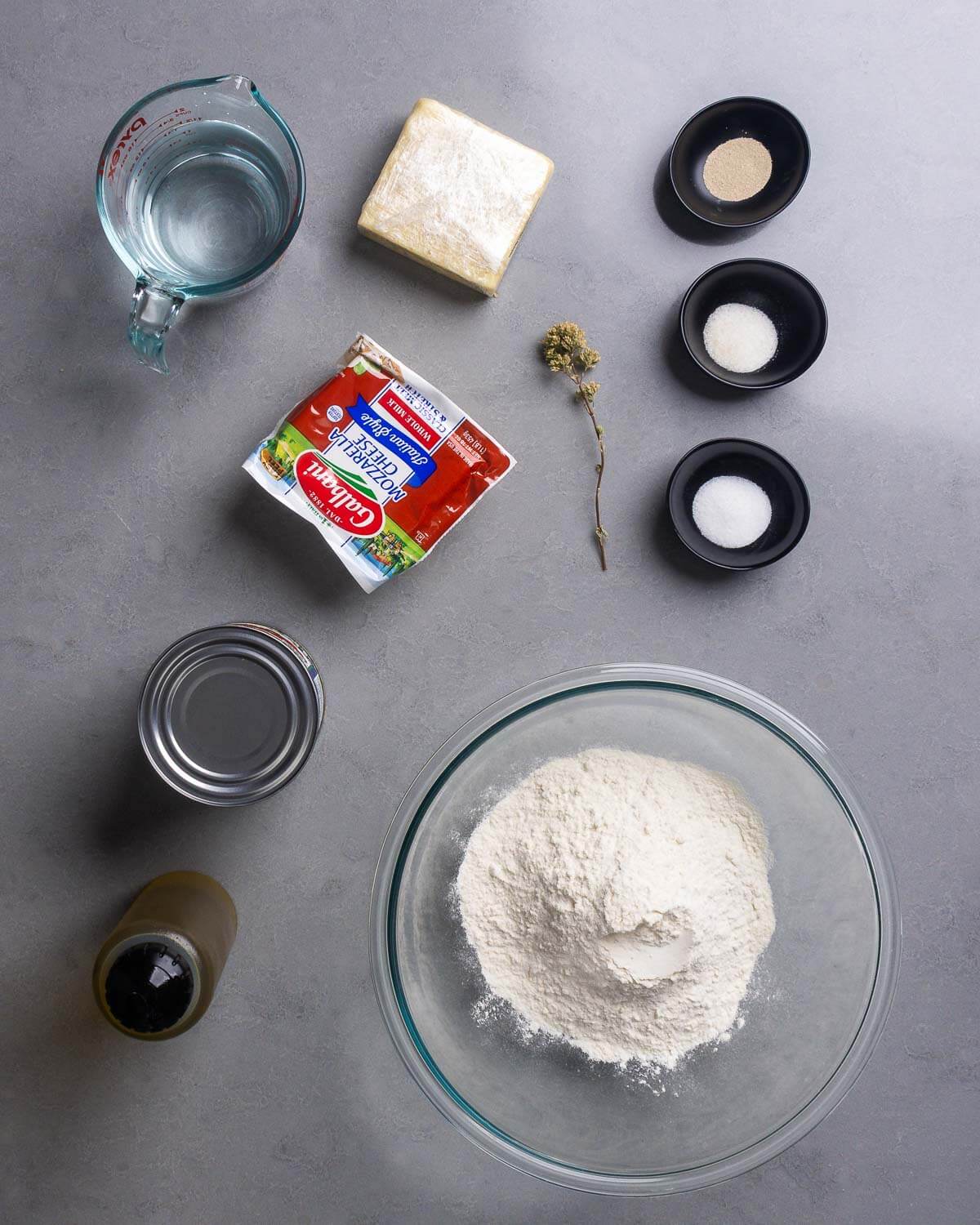
- Flour. I use bread flour for my Detroit pizza dough, as I do for most of my other pizza recipes. Bread flour has a higher protein content and is better for bread and pizza making, and is specifically important for higher hydration doughs like Detroit pizza dough. I don’t recommend deviating and using different flours for this recipe since the dough will likely be stickier and more difficult to work with if using an all-purpose or other flour.
- Yeast. I am using instant yeast as I do for all my pizza and bread recipes – it’s easier to work with and can be added directly to the dry ingredients. You can use active dry yeast, but you’ll need to add it to 110°F water until it bubbles.
- Cheese. Wisconsin brick cheese is typically used for Detroit pizza, but that can be hard to source. I’m using a combination of mozzarella and white cheddar, though you can use Monterey Jack in place of the cheddar, or you can use all mozzarella. The cheese is placed on top of the pizza, but also along the sides, providing the crispy, cheesy edge, or frico, that is characteristic of Detroit pizza.
- Tomatoes. I’m using 1 28-ounce can of crushed tomatoes that I drain. You’ll need the strained tomatoes, plus some of the tomato water that’s left after draining for this recipe.
- Oil. I use olive oil for the dough, and corn oil for oiling the bottom of the pan as it helps provide a crispy brown bottom. You can use olive oil for the pan too if you don’t want to use corn oil.
See the recipe card for full information on ingredients and quantities.
Want To Save This Recipe?
How to make Detroit pizza
Each number corresponds to the numbered written steps below.
- In a large bowl, combine the dry ingredients for the dough, adding a little water at a time, mixing thoroughly to form a dry rough mass.
- Pour the olive oil over the dough and mix again to scrape off residue then cover with plastic wrap for 20 minutes.
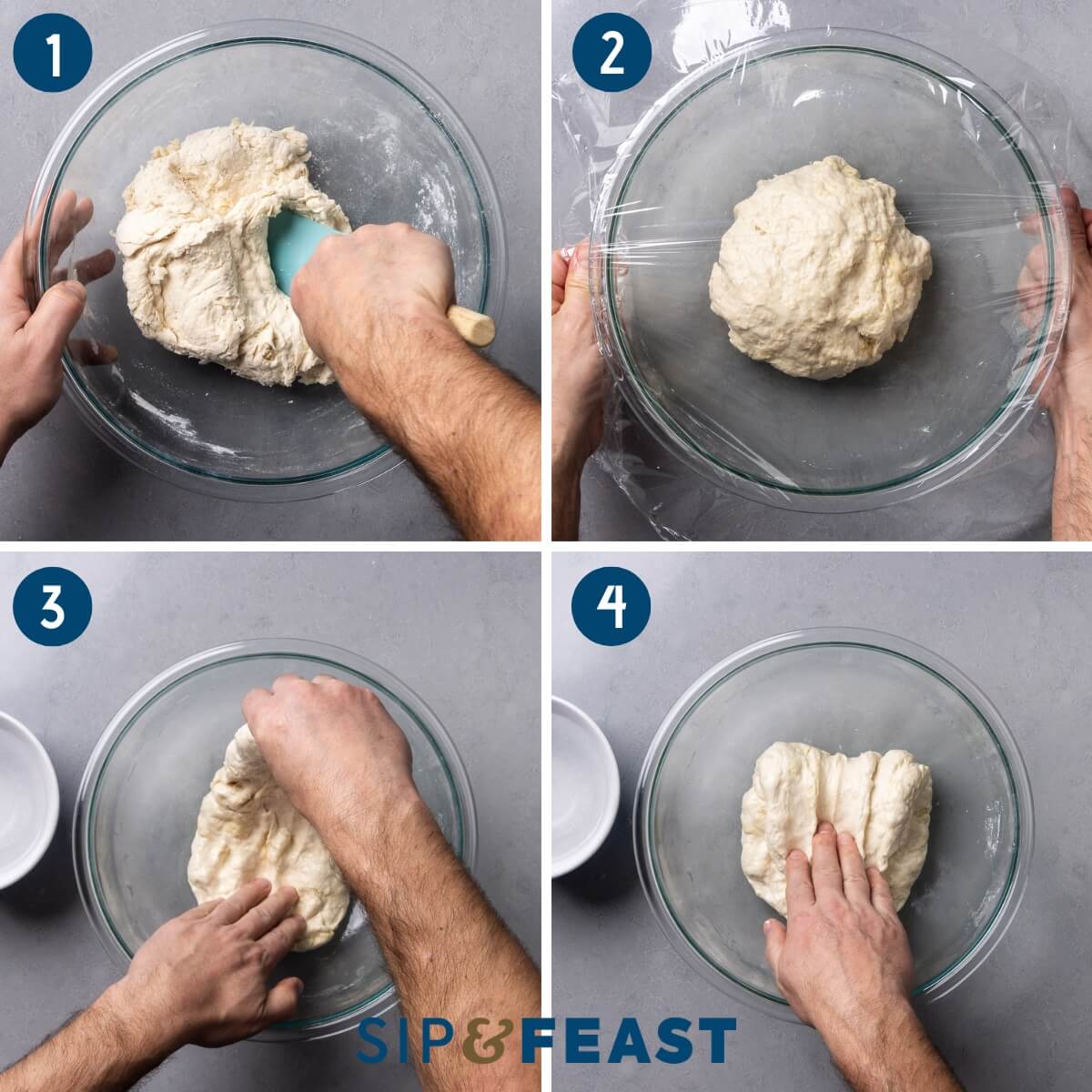
- Remove the plastic and bowl-fold the dough. Dip your hands in a bowl of water and stretch the dough up.
- Pull the dough back down towards the middle of the dough.
- Rotate the bowl 90° and perform another fold, dipping your hands in the water between each stretch and fold.
- Keep rotating the bowl, stretching, and folding until the dough no longer stretches (about 6 stretches).
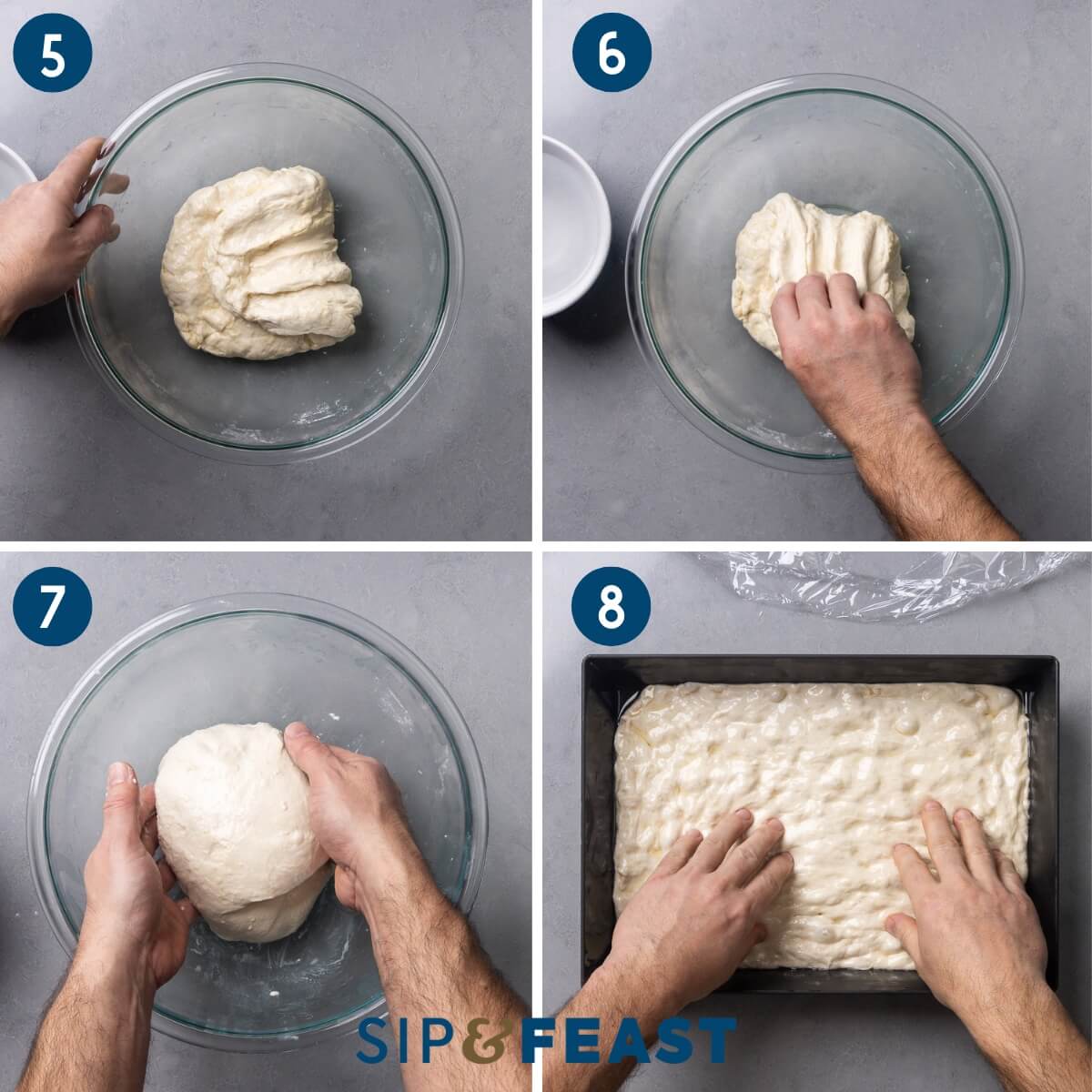
- Cover the bowl with plastic wrap and let it sit for 30 minutes before doing another series of bowl folds. After two series of bowl folds, use a bowl scraper or wet hands to place the seam side of the dough down in the bowl, then cover tightly with plastic wrap and place in the fridge overnight. You can also make the pizza the same day by placing the dough somewhere warm and allowing it to double in size, though I do recommend allowing the dough to cold ferment overnight.
- Remove the dough from the fridge 2 hours before using, preheat the oven to 500°F, and set the rack on the lowest level and another rack on the middle level. Oil a 10×14-inch Detroit pizza pan, then place the dough ball into the pan and press it as best you can to the edges of the pan. Cover with plastic wrap for 30 minutes, then press again until the edges fully cover the pan. Cover again with plastic for another hour or until the dough rises significantly. Placing the pan in a warm spot or proofing mat set to 78°F will speed up the process.
- Strain the tomatoes for 3-5 minutes to remove excess water. Add 2 tablespoons of the crushed tomatoes to the tomato water, then season the tomatoes with oregano and salt.
- Remove the plastic from the pan and lightly brush a thin layer of the tomato water on top of the dough.
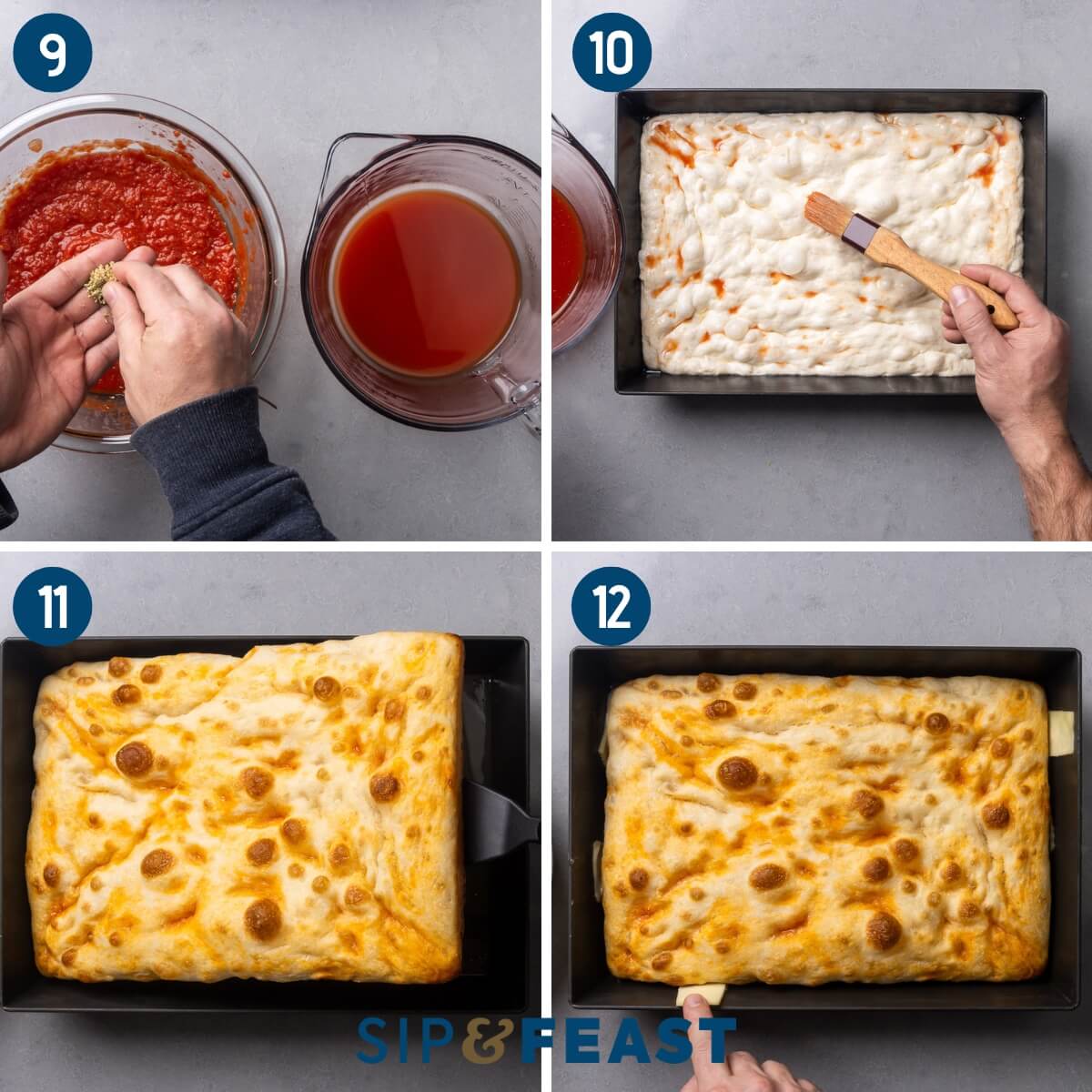
- Bake the dough for 12 minutes on the bottom rack, then remove the pan from the oven and use a spatula to gently lift the bottom. If the bottom is completely blond, you’ll need to bake the pizza on the bottom rack for the full amount of time in the next steps. If the dough is golden to golden brown, finish the pizza on the middle or upper level of the oven in the next steps.
- Slide the sliced mozzarella between the dough and pan along the entire perimeter.
- Evenly distribute the shredded cheese on top of the pizza and spread the sauce in 2 or 3 thick vertical lines, or 5 diagonal lines as shown below.
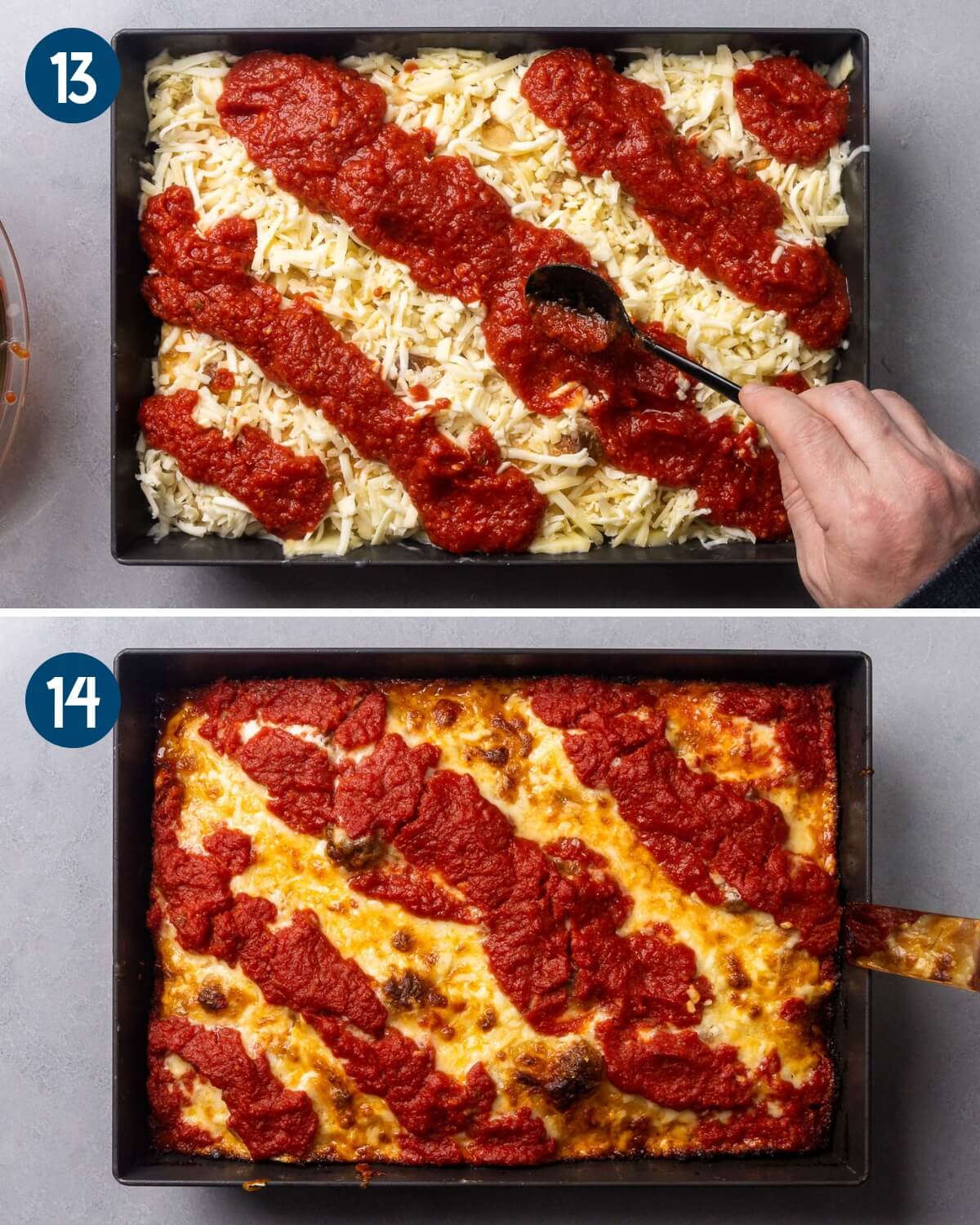
- Return the pizza to the oven (see info in step 11 above to determine oven placement) and bake for another 14-18 minutes or until the center of the dough reaches at least 195°F internally when checked with an instant-read thermometer. Remove the pizza from the pan using an offset spatula, slice it into 9 large pieces, and serve.
Top tips
- The dough. While you can use store-bought dough, I strongly recommend you make your own dough for Detroit pizza. The reason is that a high hydration dough (80%) provides the airy texture this pizza is known for. Most store-bought doughs are between 60-65% hydration, which will result in a denser pizza.
- Tools. A Detroit pizza pan works best for this recipe, though you could also use a 9×13 deep cake pan. I also recommend using an instant-read thermometer at the end for accuracy.
- Crispy edges. Detroit pizza is known for its crispy, high edges. This is created when the cheese that’s placed between the pan and the dough melts and crisps up. I do recommend using slices of mozzarella here, as it will help make it easier, though you could also form a channel between the edges of the dough and pan to sprinkle in shredded cheese.
More pizza recipes
If you are looking for more pizza recipes, you’ve come to the right place. In addition to the pizza styles referenced at the top of this article, here are a few more of our reader favorites.
If you’ve enjoyed this Detroit Pizza recipe, give it a 5-star rating.
Watch us on YouTube, follow along on our Facebook Page, and become a Patreon member to receive access to exclusive full-meal videos and content.
Detroit Pizza

Equipment
Ingredients
For the dough
- 3 1/3 cups bread flour
- 1/2 teaspoon instant yeast
- 1 1/2 teaspoons fine sea salt
- 1 teaspoon sugar
- 1 1/2 cups cold water
- 2 tablespoons olive oil
For the Detroit pizza
- 1/3 cup corn oil for oiling the pan
- 10 slices mozzarella cheese
- 1 1/2 cups shredded mozzarella
- 2 cups shredded sharp white cheddar
- 1 28-ounce can crushed tomatoes drained for 3-5 minutes and reserve tomato water
- 1/2 teaspoon Sicilian oregano
Want To Save This Recipe?
Instructions
For the dough
- In a large bowl, mix together the dry ingredients. Add the water a bit at a time and mix thoroughly to form a dry rough mass.
- Pour the oil over the dough and mix again to scrape off any dough residue stuck to the sides of the bowl. Cover with plastic wrap for 20 minutes.
- Remove the plastic and bowl fold the dough. Keep a small bowl of water near your side. Dip hands into the water and grab the edge of the dough and pull and stretch it up and back down towards the middle of the dough mass. Rotate the bowl 90° and perform another fold, dipping your hand into the water between each fold. Keep rotating and folding until the dough will no longer easily stretch (about 6 stretches). Cover the bowl with plastic wrap and let it sit for 30 minutes before doing another series of bowl folds.
- After two series of folds, use a bowl scraper or wet hands and place the seam side of the dough down into the bowl. Cover the bowl tightly with plastic wrap and place into the fridge overnight. Note: you can make the pizza the same day by letting the dough double in size after the second set of bowl folds, but the pizza will have far better flavor if refrigerated overnight.
For the Detroit pizza
- Remove the dough from the fridge 2 hours prior to using.
- Preheat oven to 500°F and set 1 rack on the lowest level and the other to the middle level.
- Oil a 10×14" Detroit pizza pan, then place the dough ball into the pan and press it out to the edges of the pan. Cover with plastic wrap for 30 minutes, then press it again into the edges to fully cover the pan. Cover again with plastic for another hour or until the dough has risen significantly. Placing the pan in a warm spot or on a proofing mat set to 78°F will speed up the process.
- Meanwhile, strain the crushed tomatoes for 3 minutes to remove excess water. Save both the strained tomatoes and the tomato water. Mix 2 tablespoons of the crushed tomatoes into the tomato water. Season the tomatoes with salt to taste and the oregano. If you want a smooth sauce, blender pulse or use an immersion blender.
- Remove the plastic from the pan and lightly brush a thin layer (about 1-2 tablespoons) of tomato water on top of the dough. Bake for 12 minutes on the bottom rack.
- Remove the pan from the oven and with a spatula check the bottom. If the bottom is completely blond in color you will most likely need to bake the pizza on the bottom rack for the full amount of time in the next steps. If the dough is golden to golden brown at this point, you will finish baking on the middle or upper level of the oven.
- Slide the sliced mozzarella into the edges of the pan. Evenly distribute the shredded cheese on top of the pizza. Spread the sauce in 2 or 3 thick vertical lines or 5 diagonal lines on to the pizza.
- Return the pizza to the oven and bake for another 14-18 minutes or until the center of the dough reaches at least 195°F internal temp when checked with an instant read thermometer. Slice the pizza into 9 large pieces or go smaller if you like. Enjoy!
Notes
- Pans. A Detroit pizza pan works best for this recipe but a 9×13 deep cake pan will also work.
- Dough. Store bought pizza dough can be subbed for the homemade dough. You will need 28-30 ounces of dough for one detroit pizza. Note: the dough I am using is a high hydration dough (80%) which gives an airy crumb. Most storebought dough will be 60-65% hydration which will result in a more dense pizza.
- Yeast. I always recommend working with instant yeast (SAF brand is what I use) because you don’t need to proof it in a warm liquid and it can be mixed with dry ingredients and salt right away. This is the yeast that most bakeries and pizzerias use for its consistency and long shelf life especially when stored in the freezer. If using active yeast, add it to the warm water first, and check for bubbles to make sure it’s alive. Once it bubbles mix it in with the dry ingredients and form your dough.
- Oil. Corn oil will produce a crispier crust than olive oil. If you want, you can oil the pan with olive oil.
- Cheese. Traditonally, Wisconsin brick cheese is used for Detroit pizza but that will prove hard to find. Montery jack can be subbed for the cheddar or you can use all mozzarella.
- Toppings. Cupping pepperoni can be used or any toppings you like. Note: a pizza with heavy toppings will take a few minutes longer to cook.
- Leftovers. Detroit pizza can be saved in the fridge for up to 3 days or frozen for 3 months. Reheat in a 350°F oven.
Nutrition
Nutrition information is automatically calculated, so should only be used as an approximation.
Follow Me

The Sip and Feast Cookbook
- 100+ recipes
- Essential tools and ingredients
- Entertaining ides
- Stunning photography